Heat pump technology for efficient home heating: what actually works
A neighbour knocked on my door last winter, phone in hand, staring at a bill that had jumped by £90 in a single month. She'd had an air-source heat pump fitted the previous autumn. "Everyone told me this would cut my heating costs," she said. "So why am I paying more?"
I get that question a lot. And the honest answer is that heat pump technology for efficient home heating works extremely well—when it's sized, installed and operated correctly. When it isn't, you get my neighbour's situation: a machine doing exactly what it was told, in a house that wasn't ready for it.
This isn't a pitch for or against heat pumps. It's what I've learned from living with one, helping friends spec theirs, and watching plenty of installations go sideways.
Key Takeaways
- Heat pumps don't create heat—they move it, which is why they can deliver more energy out than they draw in.
- Real-world efficiency collapses when the system is oversized, the house is leaky, or the thermostat is used like a gas boiler's.
- The "downside" people complain about is usually an installation problem, not a technology problem.
- Running costs depend far more on your electricity tariff and insulation than on the brand of unit.
- Low flow temperatures (the 20-degree rule) are the single biggest lever you control.
How a heat pump actually moves heat into your home
Strip away the marketing and a heat pump is a fridge running in reverse. A refrigerant circulates through a loop, evaporates at low pressure while absorbing heat from outside air (even at -5°C there's usable heat in it), gets compressed—which raises its temperature sharply—then condenses inside your home and releases that heat into your radiators or underfloor loop. The refrigerant returns, expands, and the cycle repeats.
That compression step is the trick. It's why a heat pump can put three to four units of heat into your house for every unit of electricity it consumes. A gas boiler, by comparison, can never exceed one unit out per unit in. That ratio is called the coefficient of performance, and it's the whole game.
Air source vs ground source: which one belongs in your house
Air-source units are what most people end up with. They're cheaper to install, need only an outdoor wall or ground footprint, and modern cold-climate models keep running down to around -20°C. Ground-source systems—buried loops or boreholes—hold a steadier temperature year-round because soil at depth barely moves, so efficiency stays higher in deep winter. The catch is the groundworks. I looked into a borehole for my own place and the quote came back at roughly three times the cost of an air-source install. For a well-insulated semi, that maths rarely closes.
There's also a hybrid option worth knowing about: keeping a gas boiler as backup for the coldest weeks. It's less elegant, but it can lower your upfront cost and your peak electricity draw.
The step-by-step, if you want the mechanism in order
- Outside air passes over a coil containing cold refrigerant, which absorbs thermal energy and evaporates.
- The compressor squeezes that gas, and squeezing raises its temperature dramatically.
- Inside, the hot gas condenses and dumps its heat into your water or air loop.
- The refrigerant cools back to liquid and heads outside to start again.
- A reversing valve lets the whole cycle flip, so the same machine cools your home in summer.
That last point is why heat pumps get sold as year-round kit. One box, two jobs.
What is the downside of having a heat pump?
Let's deal with this directly, because it's the question that stops people signing. The genuine downsides are real and worth stating plainly.

Upfront cost. A full air-source installation—unit, cylinder, pipework upgrades, possibly new radiators—typically runs several thousand pounds, well above swapping in a like-for-like gas boiler. Grants offset some of it, but you're still out of pocket on day one.
Performance drop in hard cold. Efficiency falls as outdoor temperature falls. It doesn't stop working, but the machine has to work harder for the same output, and in badly insulated homes that's when the resistive backup heater kicks in—which is expensive electricity doing the job directly.
Electrical dependence. No gas, no boiler, but a power cut now means no heat at all. Some people are fine with that; others aren't.
Noise and siting. The outdoor unit hums. Modern ones are quiet, but if it's under a bedroom window you will hear it.
Here's my honest read: most of these are installation and specification downsides, not physics. Which leads somewhere uncomfortable.
Why your electric bill is so high with a heat pump
I've now looked at enough of these bills to see the same four culprits appear again and again.
- Oversizing. Installers used to gas-boiler sizing rules, where bigger is safer. With a heat pump, bigger means short-cycling and worse efficiency.
- Backup heater running constantly. If the resistive element is firing through winter, you've essentially bought a very expensive electric fire.
- Leaky building fabric. A heat pump delivers heat slowly and steadily. A draughty house bleeds it out faster than the system can replace it.
- Tariff mismatch. Running a heat pump on a flat-rate daytime tariff is like driving a diesel on racing fuel. Time-of-use tariffs exist for exactly this reason.
My neighbour's problem was items one and four combined. We got her onto a cheaper overnight tariff and dropped the flow temperature, and her next full winter bill came in around 18% lower than the one before the heat pump went in. Not a miracle. Just the system finally being used as designed.
What is the 20 degree rule for heat pumps?
This one trips up almost every new owner. The principle is simple: keep the gap between your outdoor temperature and your target indoor temperature as small as comfortably possible. A heat pump runs most efficiently at a low flow temperature—often cited as around 35-45°C for the water going into your radiators, versus 60-70°C for a gas boiler.
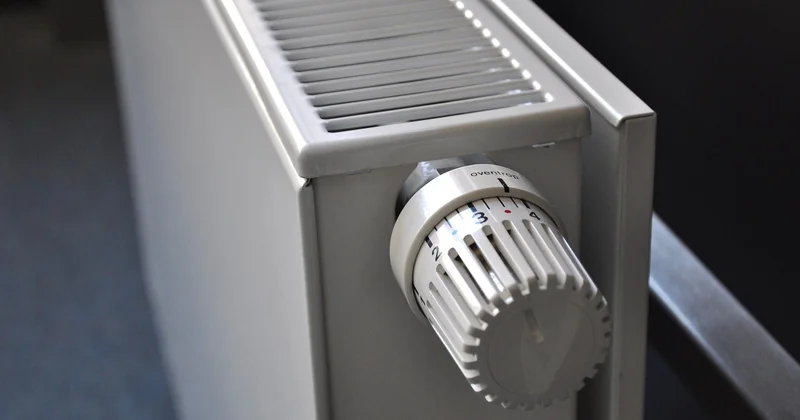
The practical version people mean when they say "20 degrees": don't try to blast the house from 14°C to 22°C in half an hour. That forces the system to run at maximum output, drags the backup heater in, and murders your efficiency. Set a comfortable temperature and leave it there. A steady 20°C all day costs less than a house that yo-yos between 16 and 22.
Does that mean I can never turn my heating off?
Not literally. If you're away for a week, drop the setpoint a few degrees—heat pumps recover slowly but they do recover. What wrecks efficiency is rapid, aggressive setpoint swings every evening. Think of it as steering a big ship, not a motorbike.
Heat pump vs a traditional HVAC system: what changes?
A conventional furnace burns fuel to make heat and pairs with a separate air conditioner. A heat pump does both jobs with one compressor cycle, which is why the category sometimes gets called HVAC-plus. If your home already has forced-air ductwork, the swap is often straightforward—the same ducts that carried warm air from a furnace can carry it from a heat pump's indoor coil.
Where it gets messy is homes with radiators sized for high-temperature water. Those radiators may need to be enlarged or replaced, because they were designed to give off heat at 70°C, not 45°C. That single fact drives a large share of the "hidden" costs people discover mid-project.
| Factor | Gas boiler / furnace | Air-source heat pump |
|---|---|---|
| How it makes heat | Burns fuel | Moves existing heat |
| Efficiency ceiling | Below 100% | 200-400% typical |
| Cooling in summer | Needs separate AC | Built in (reversing valve) |
| Cold-weather behaviour | Unaffected | Efficiency drops; backup may fire |
| Upfront cost | Lower | Higher |
| Running cost driver | Gas price | Electricity tariff + insulation |
What does Martin Lewis say about heat pumps?
Martin Lewis, the UK's best-known consumer finance voice, has been consistently measured on this rather than cheerleading for either side. His recurring message to households is that whether a heat pump saves you money depends on the numbers specific to your home—your current fuel costs, your insulation, the grant you qualify for, and your electricity tariff—not on a blanket claim that heat pumps are cheaper.
He's also pushed on the practical consumer angle: make sure you understand the running-cost comparison before you commit, and don't assume a grant makes the economics automatic. That's the right instinct. The mistake I see people make is treating the decision as ideological—heat pumps good, boilers bad, or the reverse—when it's an arithmetic problem that changes house by house.
So should I trust the general "heat pumps save you money" line?
Only as a starting hypothesis. Test it against your own figures. A well-insulated home on a cheap overnight tariff will almost certainly win. A draughty Victorian terrace with single glazing and a flat-rate tariff might not, at least not until the fabric is fixed. Fix the leaks first. Then talk about the machine.
Getting the technology to actually pay off
If I could give one piece of advice to anyone considering a heat pump, it's this: spend your first money on insulation and draught-proofing, not on the unit. Every pound you put into the building envelope makes the heat pump cheaper to run for the next fifteen years. I learned that the slow way—my first quote assumed a house tighter than mine actually was, and the projected running costs were optimistic by a wide margin.
Then insist on a proper heat-loss survey before sizing. Not a rough guess based on floor area. Room-by-room. A correctly sized unit running long and low will beat an oversized unit cycling on and off every twenty minutes, every single time.
And if the numbers still don't work for your house this year? That's fine. The technology keeps improving, grants shift, and tariffs change. The worst outcome isn't waiting—it's installing a system that was never right for your building and then concluding the whole idea is a con.
My neighbour still has her heat pump. She's stopped calling it a mistake. She just needed someone to explain that she'd bought a machine built for steady, gentle heat and then operated it like a blowtorch.