You pull into a charging bay, plug in, and the screen says 38 minutes to 80%. Twenty minutes later it still says 38 minutes. Nobody warned you that the last stretch from 80% to full crawls while the first 60% flies — or that the car next to you is pulling 150 kW from the same cabinet while you're stuck at 47.
That gap between what the map promised and what the cable delivered is where most confusion about electric vehicle charging infrastructure actually lives. Not in the plugs. In the physics, the money, and the standards war underneath them.
Here's what I've learned from running an EV daily, installing a home charger twice (the first one was a mistake), and watching public networks grow from a novelty into something you can genuinely plan a road trip around.
Key Takeaways
- Charging splits into three real tiers by power output, not by brand: roughly 120 V, 240 V, and DC fast charging from 50 kW up past 350 kW.
- The connector war is settling — CCS and NACS are converging, and CHAdeMO is fading — but you'll still carry adapters for a few years.
- Home charging covers the overwhelming majority of daily needs; public fast charging exists for distance, not routine.
- Cost per kWh at a public station can be two to four times your home rate, and idle fees punish you for lingering.
- Grid strain is real but local — the bottleneck is usually a single transformer serving a whole street or plaza.
EV charging infrastructure explained: the three tiers that matter
Forget the marketing names. Every charging point on earth falls into one of three power classes, and that class determines almost everything you care about.
Level 1 and Level 2: the slow, honest workhorses
Level 1 is a standard household outlet. In North America that's 120 V; in Europe it's a 230 V socket. You get somewhere between 3 and 8 miles of range per hour. I ran a Leaf on Level 1 for four months and it worked fine — because I drove 22 miles a day. When I took a job 60 miles away, it collapsed overnight.
Level 2 runs on 240 V (North America) or a dedicated 230 V circuit, delivering 7 to 22 kW. That's 20 to 80 miles of range added per hour. This is the tier that replaces the gas station for daily life. A wallbox on a 7.4 kW circuit refills a 60 kWh battery from empty in about eight hours — one overnight session.
DC fast charging: where the real engineering happens
DC fast charging bypasses your car's onboard charger entirely and feeds the battery directly. The cabinet does the AC-to-DC conversion instead. This is why the equipment costs tens of thousands rather than hundreds.
Power ranges from 50 kW on older units to 350 kW and beyond on the newest. But here's the part nobody puts on the sign: your car's peak acceptance rate caps what you actually get. A car limited to 100 kW will never pull 150 kW, no matter what the cabinet offers. I've stood at a 350 kW stall watching my own car take 88 kW and felt mildly insulted by my own vehicle.
The speed also collapses as the battery fills. The useful working range is 10% to 80%, and pushing past that on a road trip is almost always slower than just leaving.
Connectors, standards, and the war that's finally ending
Two plugs used to fight for the same parking space. That fight is mostly over.

What each connector actually does
- Type 2 / Mennekes — the AC standard across Europe. Not for DC.
- CCS1 and CCS2 — the combined AC/DC format, basically Type 1 or Type 2 with two extra DC pins bolted underneath.
- NACS — Tesla's connector, opened up and now adopted by essentially every major automaker selling in North America.
- CHAdeMO — the Japanese DC standard. Still alive in Japan, increasingly rare elsewhere.
- GB/T — China's domestic standard, dominant in the world's largest EV market.
The convergence on NACS in North America happened faster than almost anyone predicted. In 2022 I would have told you to buy a CCS adapter and stop worrying. By 2026 the sensible advice has flipped for new buyers in that market.
What this means when you're standing at a stall
Practically: carry the adapter your region needs, and check the network app before you commit to a route. A 400-mile drive planned around 50 kW CHAdeMO stops takes hours longer than one planned around 150 kW CCS. Same distance, completely different day.
Costs: what you actually pay, and where it hurts
Home electricity is the single biggest financial advantage of driving electric, and it's not close. At a typical residential rate, filling a 60 kWh battery costs somewhere in the range of $8 to $15 depending on where you live. Public DC fast charging runs two to four times that per kWh, and some networks add a session fee on top.

| Charging type | Typical power | Range added per hour | Relative cost per kWh |
|---|---|---|---|
| Level 1 (household outlet) | 1.4–1.9 kW | 3–8 miles | Lowest |
| Level 2 (home wallbox) | 7–22 kW | 20–80 miles | Low |
| Level 2 (public) | 7–22 kW | 20–80 miles | 2–3× home |
| DC fast (50–150 kW) | 50–150 kW | 150–500 miles | 2–4× home |
| DC fast (350 kW) | 350 kW+ | Up to 700 miles | Highest, plus idle fees |
Installation is its own line item. A home Level 2 charger plus an electrician runs roughly $1,000 to $2,500 in North America, more if your panel needs upgrading — which mine did. That was a $1,800 surprise I did not budget for.
The real problems with charging infrastructure today
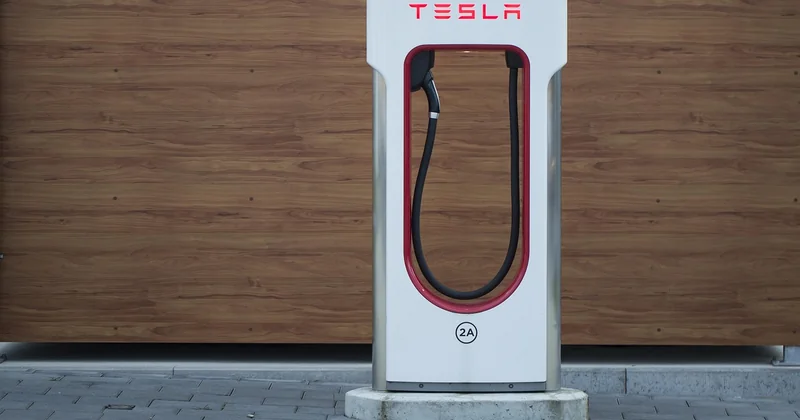
Reliability, not coverage, is the complaint I hear most. A station that exists on the map but delivers half its rated power is worse than no station, because you've already committed the detour.
Why reliability breaks down
Three recurring causes. Cable and connector damage from being driven over or dropped. Payment and authentication failures where the app and the cabinet disagree. And thermal throttling — cabinets derate in extreme heat or cold, so a 150 kW unit delivers 60 kW on a 100°F afternoon.
Grid limits and load management
The grid problem is local and specific. A single distribution transformer might serve a dozen homes or one shopping plaza. Add six 150 kW chargers and you've added megawatt-scale demand to a circuit designed for a fraction of that. Utilities solve it with load management — staggering charge rates across stalls — or with on-site batteries that buffer the peak. Both work. Both cost money that has to come from somewhere.
Bidirectional charging (V2G, or vehicle-to-grid) is the other lever. Your car's battery becomes a grid asset, absorbing cheap overnight power and pushing it back during peak demand. It's real, it's deployed in pilot programs, and it's not yet something you can casually sign up for in most places.
Planning a trip around charging that actually works
A few habits that have saved me real time.
- Charge to 80% on DC fast stops, not 100%. The last 20% is slow and rarely worth the wait.
- Precondition the battery before arriving at a fast charger in cold weather — most cars let you route to a charger and warm the pack en route.
- Check recent check-ins on the network app, not just the station's existence.
- Have a backup stall planned for every stop longer than 30 minutes.
- Set a charge limit of 80–90% for daily driving; sitting at 100% degrades the pack over years.
None of this is exotic. It's just different from fueling a gas car, and the difference is mostly in the planning, not the driving.
Where this is heading
The infrastructure is no longer the reason people hesitate. In 2015 it genuinely was — the network barely existed outside a few corridors. Now the honest constraints are narrower: reliability, cost at the fast end, and the age of the local grid serving the parking lot you're standing in.
The connector war is ending. The power tiers aren't going to change. What will change is how gracefully a 30-year-old transformer handles six cars charging at once on a Tuesday evening — and that's a problem no adapter will solve.