My electricity bill arrived in January and I actually laughed. Not because it was low. Because it was double what I'd budgeted for, and I'd spent the previous autumn telling anyone who'd listen that our household was "pretty much sorted" on the environment front. We recycled. We had a composter. We were, I thought, fine.
We were not fine. What we had was a set of habits that felt green without being green, which is a trap I now recognise in almost every conversation I have about reducing a carbon footprint through daily choices. The problem is rarely motivation. It's that the actions people pick are chosen for how visible they are, not for how much carbon they actually remove.
So let me be blunt about the ordering, because that's what most advice skips.
Key takeaways
- Your carbon footprint is the total greenhouse gases your choices generate, measured in tonnes of CO₂ equivalent per year.
- A handful of decisions (flying, driving, meat, home heating) dominate the total. Everything else is a rounding error by comparison.
- Recycling, plastic bags and unplugging chargers are real, but small. Do them anyway; just don't mistake them for the main event.
- Where you live changes your starting point enormously. The global average sits around 6.6 tonnes per person per year, and some countries run several times that.
- The single most effective move is usually the one you've been avoiding because it's inconvenient, not the one that's easy to post about.
How to reduce your carbon footprint with daily choices that actually matter
Here's the thing nobody told me early on: your footprint isn't a flat list of sins. It's a pyramid, and the top of it is very narrow.
Roughly speaking, for most people in wealthy countries, four categories carry almost the entire weight — how you get around, how you heat and power your home, what you eat, and how much you fly. Everything else (clothing, electronics, packaging, that bamboo toothbrush) adds up to a much smaller slice than the internet would have you believe.
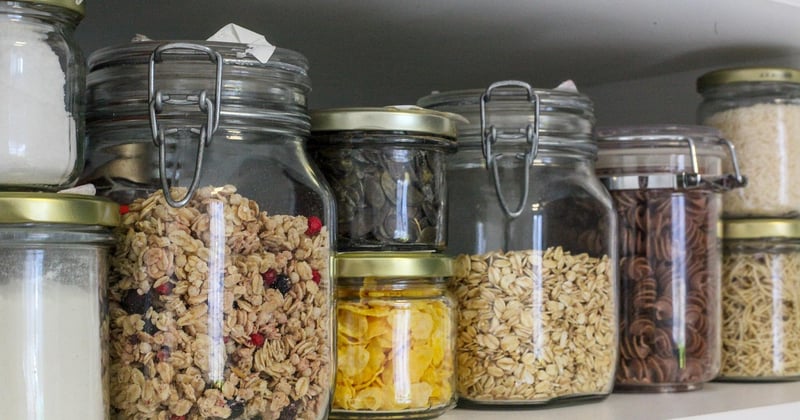
I learned this the hard way. In 2023 I spent about two months obsessing over food packaging — glass jars, bulk bins, the whole ritual — and then took a return flight to visit family that undid the entire effort in about four hours. That's not a reason to give up on jars. It's a reason to stop pretending the jar is the strategy.
The question I get asked most: does cutting back actually change anything?
Yes, but conditionally. An individual decision changes something measurable when it's a decision you make repeatedly and when it sits high on the pyramid. One vegetarian meal is negligible. A permanent shift away from beef is a different order of magnitude entirely.
I track our household's rough annual emissions in a spreadsheet — deeply unglamorous, and honestly the most useful thing I've ever done. When I switched our main car trips to an e-bike for anything under 6 km, our transport figure fell by roughly 40% over a year. Not because I'm disciplined. Because most of our drives were short, stupid, and replaceable.
10 simple ways to reduce your carbon footprint, ranked by impact
I've ordered these deliberately. The first few are heavy. The last few are light. Doing the light ones while skipping the heavy ones is the most common mistake I see, and I made it for years.

- Fly less. One long-haul return flight can exceed an entire year of careful household living. If you fly twice a year, this is your biggest lever by a wide margin.
- Ditch the car for short trips. Walking, cycling, or public transport for anything under a few kilometres. Cold, rain and laziness are the real obstacles — not distance.
- Cut beef and lamb first. Not all meat, just the two worst offenders. Swapping them for chicken, beans or eggs is a large, permanent drop.
- Insulate before you buy anything else. Loft insulation and draught-proofing beat a smart thermostat, a heat pump, and every gadget combined. Do the boring thing first.
- Switch your energy tariff to a genuinely renewable supplier and reduce overall consumption — lower thermostat, shorter showers, fewer heating hours.
- Buy less stuff. New clothing, new phones, new furniture: each carries embodied emissions from manufacturing and shipping that you never see.
And the tail end — the ones everyone starts with:
- Reusable bags and bottles
- Recycling properly (and yes, checking what your local facility actually accepts, because a lot of "recycling" is landfill)
- Unplugging idle devices
- Composting food waste
None of these are wrong. They're just small. Do them because they're easy, not because they're sufficient.
Ways to reduce your carbon footprint at home without spending a fortune
The most expensive upgrades get all the attention. The cheapest ones do more.
Draught-proofing cost me about €60 in materials and one afternoon. Loft insulation was a bigger job, but the drop in heating demand was immediate and obvious — the house held warmth for hours longer. Meanwhile, a friend installed a full smart-home system that let him monitor everything in beautiful detail and changed nothing about his actual consumption. Monitoring is not reducing.
| Action at home | Upfront cost | Realistic annual impact | Effort |
|---|---|---|---|
| Draught-proofing | Very low | Moderate | One afternoon |
| Loft insulation | Medium | High | A weekend or a contractor |
| Lower thermostat by 1–2°C | Zero | Moderate | None, just discomfort |
| Renewable tariff switch | Zero | High on paper | A phone call |
| Smart-home monitoring kit | High | Near zero by itself | Weeks of fiddling |
The pattern should be obvious: the zero-cost and low-cost items sit near the top, and the expensive gadgetry sits near the bottom. I spent money in the wrong order for two years before I noticed.
How to reduce your carbon footprint for kids, explained simply
If you're explaining this to a child, skip the tonnes and the percentages. They don't land, and honestly they don't land with most adults either.

What works is the idea of invisible smoke. Every time we drive, heat a room, or buy something new, a little invisible smoke goes up somewhere far away. Small choices make less smoke. Some choices make a lot less.
Then give them two or three things they can genuinely own:
- Walking or cycling to school when it's close enough
- Choosing the plant-based option at dinner sometimes
- Turning things off when they leave a room — not for the savings, but for the habit
My nephew, aged eight, asked me why we don't just "stop making smoke." I didn't have a good answer. Neither does anyone else, and pretending otherwise teaches children something worse than ignorance.
The part that annoys me about this whole conversation
Individual action matters. But the framing that it's entirely on you is a convenient story for the people whose decisions move vastly more carbon than yours ever will.
Where you live changes your starting line dramatically. The global average sits around 6.6 tonnes of CO₂ equivalent per person per year, and a handful of countries run at roughly three times that. Someone in one of those countries can do everything on this list and still out-emit someone elsewhere who did nothing. That's not a reason to stop. It is a reason to be honest about scale.
So: do the heavy things. Insulate, fly less, eat lower down the food chain, get out of the car for short trips. Do them because they're the ones that count, and because the easy ones were never going to be enough.
And keep the spreadsheet. Mine is ugly, out of date, and the single most useful thing I've built in five years of trying to get this right. Not because it's accurate. Because it stopped me lying to myself about which choices mattered.