
How community solar programs work for renters
A reader named Dario emailed me last spring with a screenshot of his utility bill and one question: "Is this real?" He'd been signed up for a community solar subscription for four months and had never once seen a credit appear. Nobody had told him the credits post quarterly, not monthly. Nobody had told him his first invoice would look completely normal. He was about to cancel a program that was, in fact, working exactly as designed.
That's the gap I keep running into. Most explanations of community solar stop at the brochure version — subscribe to a share of an off-site solar farm, get credits on your bill, no roof required. Fine. But renters don't get tripped up by the concept. They get tripped up by the mechanics: when money actually moves, what happens when you move apartments, and what you owe if you walk away early.
Key takeaways
- Community solar lets you buy a share of an off-site solar array and receive bill credits — no installation, no roof access needed.
- Credits usually post monthly or quarterly, and they rarely cover 100% of your usage.
- Most subscriptions are contracts, not month-to-month deals. Early exit fees are common and often buried.
- Your savings typically land between roughly 5% and 15% of the solar portion of your bill. Anyone promising more is selling something.
- If you move outside the utility's service territory, you generally have to cancel — and unused credits can be forfeited.
The actual mechanism, minus the brochure language
Here's what physically happens. A developer builds a solar array somewhere — a field, a landfill cap, a warehouse roof — and sells subscriptions to households in the same utility territory. You don't own panels. You own a slice of the output, measured in kilowatts.
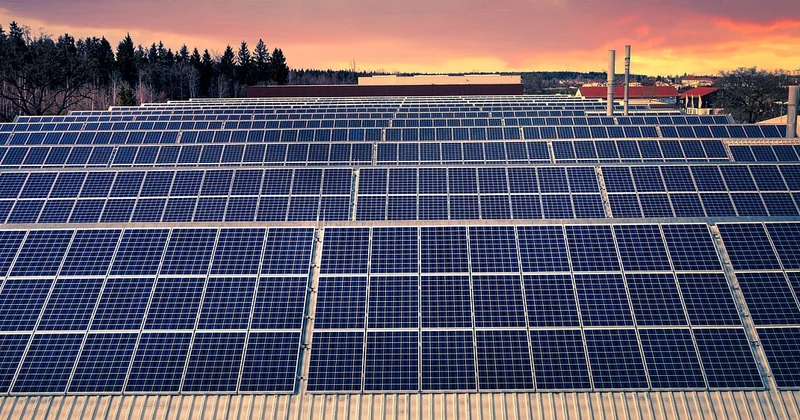
Each billing period, the utility calculates how much electricity that slice produced and issues a credit. The developer then bills you for that credit at a discount. So if your share generated $100 worth of credits, you might pay the developer $90 and the utility knocks $100 off your bill. You keep the $10.
Why the credits look weird on your bill
Two separate billing streams reach you now. The utility bill arrives as always, with a solar credit line added. The developer's invoice arrives separately — some mail it, some email it, a few auto-charge a card you forgot you entered. When I helped Dario trace his, we found four months of credits sitting on the utility side and three developer invoices he'd never opened. Nothing was broken. He just hadn't been told there were two paper trails.
The timing trap
Credit posting schedules vary by state and by program administrator. Some utilities apply credits the same month. Others batch them quarterly. A handful reconcile annually, which means you float the developer's invoice for months before the utility credit shows up. That mismatch — paying monthly, receiving quarterly — is the single most common reason people think their subscription is a scam.
It isn't. But it's a cash-flow problem, and if your budget is tight, it matters.
What is the downside to community solar?
The honest answer: the downsides are contractual, not technical. The panels work. The paperwork is where people get hurt.

- Early termination fees. Most subscriptions run 12 to 25 years, and breaking one can cost several hundred dollars or a fixed penalty tied to remaining contract value.
- Credits you don't use. If your share produces more than your household consumes, the surplus may expire at the end of a reconciliation period rather than roll over.
- Savings that shrink. Your discount is usually a percentage off the credit value. If utility rates fall, your absolute savings fall with them.
- Moving.
- Subscriber agreements that transfer poorly. Selling or assigning your subscription to another household is sometimes allowed, sometimes not, and almost never easy.
I'll be blunt about one thing: a small number of operators in this space have run aggressive door-to-door sales operations that look uncomfortably like the sales tactics you'd see in any high-pressure industry. The programs themselves aren't pyramid schemes — there's a real solar farm producing real electricity — but the sales layer deserves your skepticism.
Does community solar actually save you money?
Yes, but modestly. Typical discounts run in the low single digits to mid-teens as a percentage of the solar credit. On a household spending $120 a month on electricity, that often works out to something in the range of $5 to $15 a month in genuine savings.
Which is real money over a year. It is not a windfall. If a salesperson tells you you'll cut your electric bill in half, walk away — that math doesn't exist in this model.
How to use solar as a renter, step by step
The practical sequence matters more than the theory here.

- Pull up a recent utility bill and note your service territory — not your state, your specific utility. Eligibility depends on this and nothing else.
- Check whether your utility hosts a community solar program at all. Coverage is broad but not universal; some states have no framework for it.
- Compare at least two subscription offers. Look at the discount rate, the contract length, and the early exit clause — in that order.
- Read the cancellation terms before you sign anything. If they're not in writing, that's your answer.
- After your first credit posts, verify it against the developer's invoice. Do this for three cycles before you stop checking.
One renter I worked with — a teacher in a mid-size city — did all of this and still nearly missed that her contract auto-renewed for another decade unless she gave 90 days' written notice. Buried on page six. That clause is common enough that you should assume it exists until proven otherwise.
How do you handle a move?
If you stay inside the same utility territory, you can usually keep the subscription and just update your address. Cross into a different territory and you'll generally have to cancel — which means the early exit terms apply.
Unused credits at that point are the quiet casualty. In many programs, they simply don't follow you.
What is the downside of a solar lease?
Worth separating, because renters hear "lease" and assume it's the same thing. It isn't.
| Community solar subscription | Rooftop solar lease | |
|---|---|---|
| Who can sign up | Renters, condo owners, shaded roofs | Homeowners with suitable roofs only |
| Upfront cost | Typically none | Typically none |
| Contract length | Often 12–25 years | Usually 20–25 years |
| Moving | Keep if within territory, else cancel | Complicates a home sale significantly |
| Savings | Modest, percentage-based | Can be larger, depends on roof and rates |
| Maintenance | Not your problem | Usually the provider's, but read the terms |
The lease downside is mostly about the house. Buyers often refuse to assume a 20-year panel lease, which can stall a sale for months. As a renter, that risk simply isn't yours.
So is it worth it?
If you rent, plan to stay in the same utility territory for at least a few years, and read contracts before signing them — yes, community solar is worth it. It's one of the few ways to participate in solar without owning anything, and the savings, while small, are genuine.
If you might move across the country next year, or your electricity use is very low, the math gets thin fast.
Dario stayed enrolled. Six months later his credits caught up, his bill dropped by roughly $11 a month, and he sent me a screenshot with the subject line "ok it's real." That's the whole thing, really. Community solar isn't complicated once someone tells you which two invoices to watch — it's just that nobody usually does.