
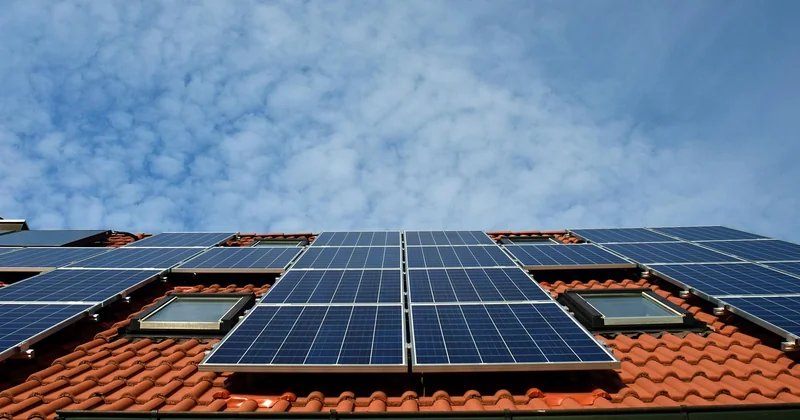
Two years ago I installed a 6.4 kW array on my roof. The first full month, my electricity bill dropped from $184 to $11. Not a typo. Eleven dollars. And that was a cloudy month.
But here's what nobody told me before I signed the contract: the savings curve isn't flat. It bends. Some months you feel like a genius. Others, you wonder if you've been scammed. If you're trying to figure out whether solar panels actually save you money, the honest answer is yes — but the size of those savings depends on four variables most installers gloss over.
This isn't a sales pitch. I've made mistakes with this system, I've had a month where I owed more than the year before, and I've run the numbers obsessively. Here's what actually matters.
Key Takeaways
- Most homeowners cut their monthly electricity bill by 50–90% depending on local rates and system size
- Payback periods typically run 7 to 12 years, not the 3–4 years some salespeople promise
- Net metering rules, not sunlight, are usually the deciding factor in your real savings
- Panel output degrades roughly 0.5% per year — barely noticeable over 25 years
- Savings are highest for people who are home during the day or have a battery
- Solar rarely makes financial sense if you're planning to move within 4 years
How much do solar panels really save you each month?
The short answer: anywhere from $50 to $200 per month for a typical US household. Mine sits around $130 in summer, $90 in winter. Your number will be different, and the gap between "solar saves you money" articles and reality comes from three inputs.
Your electricity rate — and where it's heading
Savings aren't fixed. They scale with whatever your utility charges. If you pay $0.14 per kWh, a 7 kW system that produces 900 kWh monthly offsets about $126. In Hawaii or parts of California, where rates run two to three times higher, the same system offsets $300 or more.
The moving part is the rate itself. Utility prices in most US states have climbed steadily for two decades, and there's no sign of that reversing. Every rate hike makes your solar investment look better in hindsight. That's the quiet compounding benefit nobody puts in the brochure: you're not just saving today's prices, you're locking in a hedge against tomorrow's.
System size and your actual consumption
Oversizing is the most common rookie mistake. I see neighbors with 12 kW arrays on a 1,800 square foot house, producing far more than they can use, dumping the excess onto the grid for a credit that's worth less than retail.
Size your system to roughly 100–110% of your annual usage. No more. Anything above that is a donation to your utility unless your net metering policy pays full retail for exports — and increasingly, it doesn't.
Net metering — the hidden dealbreaker
Spoiler alert: this is where most savings projections fall apart.
Net metering is the arrangement where your utility credits you for power you send to the grid. Twenty years ago, most states offered full retail credit — one exported kWh cancelled one consumed kWh. That's changing fast. Several states have moved to reduced credits, wholesale rates, or time-of-use structures where exports at noon are worth a fraction of what you pull at 7pm.
What this means in practice: two identical houses in neighboring states can see wildly different returns. One pays back in 8 years. The other takes 15. Same panels, same sun, different policy.
Check your utility's current export rate before anything else. It matters more than the brand of panels or the installer's pitch.
The savings nobody mentions: time-of-use and self-consumption
Here's the uncomfortable truth I learned in month four. My utility shifted me onto a time-of-use plan. Suddenly, power I consumed at 6pm cost nearly triple what I exported at 1pm. My system was producing beautifully — and I was still paying for evening electricity because I had no battery and no one home during peak production hours.
That month, my bill was $67. Higher than the $11 from before.
The fix isn't more panels. It's using your own power when you make it.
- Run the dishwasher, washing machine, and dryer during daylight hours
- Pre-cool or pre-heat the house before peak-rate windows begin
- Charge an EV mid-day if you have one — this is where solar shines brightest
- Add a battery only if your export credit is genuinely poor and outages matter to you
Self-consumption is the real savings engine in 2026. Exporting power is becoming less valuable by the year.
What does the payback period actually look like?
Installers love quoting four or five years. I've never seen a real homeowner hit that without heavy state incentives.

My system cost $18,400 before incentives, $12,900 after. My average annual savings run about $1,450. That's a payback of roughly nine years. Not glamorous. Still solid, because panels last 25–30 years and I'll spend most of that period essentially printing free electricity.
Where payback stretches toward 15 years: low electricity rates, weak net metering, heavy shading, or a roof that needs replacing in the next decade. Where it shrinks below seven: high rates, strong state rebates, high daytime consumption.
| Scenario | Electricity rate | Net metering | Typical payback |
|---|---|---|---|
| Favorable (CA, HI, parts of MA) | High ($0.25+ /kWh) | Strong or full retail | 6–9 years |
| Average (most US states) | Medium ($0.13–0.18) | Reduced credit | 9–13 years |
| Poor (low rates, weak policy) | Low (under $0.11) | Wholesale only | 14–20 years |
Are solar panels worth it?
Yes, for most homeowners who plan to stay put and have a reasonably sunny roof. No, if you're moving in three years, if your roof is shaded most of the day, or if your utility just gutted its export credits and you have no way to consume the power yourself.
Worth it isn't a universal verdict. It's a math problem with your address plugged in.
How much money do solar panels save per month?
Realistically, $50 to $200 monthly for a typical household, with higher figures in expensive-rate states and lower ones where electricity is cheap. My own average lands near $120 across the year, with summer peaking around $160 and winter dropping to $70. Anyone quoting a single flat number for every home is guessing.
5 reasons why solar panels are not worth it
There are legitimate cases where they aren't. I'll give you five, honestly.
- You're moving soon. Payback takes years, and buyers don't always value a system at what you paid.
- Your roof needs replacing. Installing panels on a 15-year-old roof means paying to remove and reinstall them later.
- Heavy shading. One large tree can cut output by 30% or more, and trimming it isn't always an option.
- Your utility pays pennies for exports while you're away all day and can't self-consume.
- You financed at a high rate. A loan at 8–9% can eat most of the savings you'd otherwise bank.
None of these make solar bad. They make it wrong for that specific house.
Efficiency of solar panels over time
Panels lose output slowly. The industry standard warranty guarantees around 80–85% of original capacity at year 25, which works out to roughly 0.5% degradation annually. After a decade of owning mine, I can't see any meaningful drop in production — the yearly variation from weather is larger than the degradation.
Inverters are the real wear item. Mine lasted eight years before failing; replacements run $1,200–$2,500 installed. Budget for that. It's the expense every savings calculator conveniently forgets.
Pros and cons of solar panels for home
Pros: lower bills, protection against rate hikes, a 25-year asset, higher home resale value in many markets, and a genuinely smaller footprint (a typical home system offsets several tons of CO₂ yearly).
Cons: meaningful upfront cost, inverter replacement around year 8–12, policy risk from shifting net metering rules, and a payback clock that resets if you sell too soon.
Weigh those against your situation, not against a generic list. The house down the street isn't yours.
The verdict I'd give a friend
Solar has paid me back in ways the spreadsheet didn't capture. My summer cooling bill is basically gone. I stopped flinching at rate-hike letters. And there's something quietly satisfying about watching the meter run backward while the AC blasts.
But I also spent three weeks untangling my net metering policy, got surprised by a time-of-use switch, and paid for an inverter replacement sooner than I expected. The savings are real. The timeline is longer than advertised.
Before you sign anything, ask one question: what does my utility pay for exported power, and how might that change? If the answer is vague, walk away and do more digging. Your roof will still be there next year — and the panels will be cheaper, the policy picture clearer.
The homeowners who win at solar aren't the ones who moved fastest. They're the ones who read the fine print on their utility's rate schedule before the installer ever climbed the ladder.