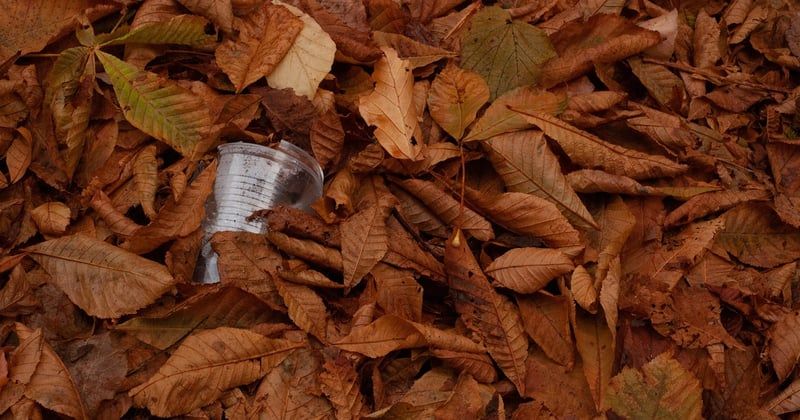
Walk into any supermarket in 2026 and you'll spot them: the "100% compostable" coffee cup, the starch-based cutlery, the cardboard tray with the little green leaf printed on it. They look like progress. Then you read the back of the packet and find a footnote that says something like "industrially compostable — suitable for facilities where available." Which, depending on where you live, might mean a plant three hundred kilometres away that your local council has no contract with. The cup still ends up in landfill, and the word "biodegradable" has done its real job: making you feel better without changing the outcome.
That gap between the claim and the reality is where the actually interesting work is happening right now. Biodegradable packaging innovations are reducing plastic waste, but not in the tidy way the marketing suggests. They reduce it in specific places, under specific conditions, and often at a cost nobody puts on the label. Let's walk through what's genuinely working, what's expensive theatre, and what you should look at before you commit a production line to any of it.
Key Takeaways
- Biodegradability is a property of an environment, not a material. A "biodegradable" label means nothing without knowing where it will decompose and how long that takes.
- Three material families are actually scaling in 2026: moulded plant fibre, mycelium composites, and seaweed-based film.
- Cost per unit is the real barrier. Compostable formats typically run higher than virgin plastic, sometimes by a factor you'll feel on your margin.
- Legal definitions in Europe and North America are tightening, which will retire a lot of vague labels.
- The biggest plastic reductions usually come from redesigning the pack, not swapping the material.
Biodegradable packaging innovations reducing plastic waste: what actually works
Start with the distinction that the industry keeps blurring. Something is biodegradable if microorganisms can break it down into water, carbon dioxide, and biomass. That much is simple. What's not simple is the timescale and the conditions. A material can biodegrade in six weeks in an industrial composter running at 55°C and do absolutely nothing in a cold, oxygen-starved landfill for decades.
So when you see "biodegradable" on a pack, ask three things: which environment, how long, and what does it leave behind. If the supplier can't answer those three without hesitating, you've learned something useful.
The three material families worth your attention
Most of what's genuinely scaling falls into one of these groups.
Moulded plant fibre. Bagasse from sugarcane, wheat straw, bamboo pulp. These get pressed into trays, clamshells, and cup lids. The technology isn't new — it's been around for takeaway containers for years — but the tooling and finish quality have improved a lot. Surfaces are smoother, tolerances are tighter, and they don't feel like they've been cut from a cereal box anymore. They compost in industrial conditions in roughly two to three months, and they degrade in home compost too, just slower.
Mycelium composites. You grow fungal networks through agricultural waste, and the mycelium binds it into a solid shape. The beauty is that you can grow packaging to fit a mould rather than cutting it from a sheet, so there's very little waste in production itself. It's excellent for protective inserts and cushioning where you don't need a food-contact surface. The catch: production is slower than injection moulding, and it's still a niche capacity.
Seaweed and algae films. These give you a thin, flexible film — the kind of thing you'd wrap around a sandwich or use as a sachet. Seaweed grows without fresh water or fertiliser, which is a genuine advantage, and the film breaks down in marine environments, which almost nothing else does. That last point matters more than people realise, because a huge share of plastic waste enters the ocean as packaging film.
Here's the thing about all three: none of them are drop-in replacements for the plastic you're using today. Each one changes how your product behaves in storage, in transit, and on the shelf.
How do these materials compare in practice?
The table below reflects what I've seen working with suppliers and brands over the past couple of years. Treat the cost column as a range, because it swings wildly with volume.
| Material | Best use case | Composting conditions | Relative cost vs virgin plastic | Main limitation |
|---|---|---|---|---|
| Moulded bagasse / straw fibre | Rigid trays, clamshells, cup lids | Industrial, 8–12 weeks; home compost slower | Moderate | Moisture sensitivity, bulky freight |
| Mycelium composite | Protective inserts, cushioning | Home and industrial, 4–8 weeks | Higher | Low production capacity |
| Seaweed / algae film | Flexible wrap, sachets | Marine and home, weeks | Higher | Barrier properties weaker than plastic |
| PLA (polylactic acid) | Cold cups, cutlery, clear lids | Industrial only | Moderate to higher | Needs industrial facility, no home compost |
| Recycled PET | Bottles, thermoform | Not biodegradable | Low | Still plastic; depends on collection |
Notice the last row. Recycled PET isn't biodegradable at all, yet in many supply chains it cuts plastic waste more reliably than a compostable alternative that never reaches a composter. That's an uncomfortable conclusion for anyone selling the compostable story, but it's the one the numbers keep pointing at.
Why the label often lies — and how to read it properly
"Biodegradable" and "compostable" are not synonyms, and in most jurisdictions they're not regulated the way you'd assume. A pack can carry a biodegradability claim while being designed to break down only in conditions that exist in a handful of facilities.
The European Union's packaging regulation has been tightening the definitions, and the direction is clear: vague claims are on their way out. Home-compostable and industrially-compostable are being separated into distinct categories with distinct certification. If you're specifying packaging for a product line you plan to sell in three years, assume the loose labelling you see today won't be legal then.
What to ask your supplier before you sign
Four questions, and don't accept a brochure in place of an answer.
- Which certification does this material hold, and can you show me the certificate number?
- What environment does it decompose in, and over what measured period?
- What does it leave behind — does it meet a recognised standard for leaving no toxic residue?
- Does it survive my actual supply chain: the humidity, the cold chain, the stacking pressure?
I've watched brands skip question four and end up with trays that went soft in a chilled cabinet after nine days. That's not a materials failure. It's a specification failure, and it's the most common one I see.
The sustainable packaging design moves that cut more plastic than swapping material
Material substitution gets the headlines. Design change gets the results.
Roughly a third of the plastic in a typical consumer pack is doing a job that isn't strictly necessary — an inner film that only exists because the outer box isn't stiff enough, a sleeve over a bottle that carries the same information as the label, a window cut into a carton for a product you can already see on the shelf. Remove the film and you've eliminated plastic without needing a single new material.
Three moves that consistently pay off:
- Delete the secondary film. If the primary pack seals properly, the inner bag is often theatre.
- Right-size the pack. Five millimetres off every dimension across a million units is a surprising amount of material.
- Concentrate the product. A more concentrated formula means a smaller container, which means less packaging for the same amount of use.
The third one is underrated. Change the formula concentration and you can shrink the bottle, cut the closure size, and reduce the freight weight all at once.
Products that need better packaging most
Not every category is equally bad. The ones where the packaging is hardest to fix also tend to be the ones where the volume is highest.
- Fresh food and produce. Barrier requirements are brutal, and the shelf life maths is unforgiving.
- E-commerce shipments. Enormous volume, low value per unit, and the void fill alone is a mountain of waste.
- Single-serve sachets. The format is designed to be thrown away, and it's one of the hardest for any collection system to capture.
- Cold-chain medication. Temperature stability rules out a lot of materials before you even start.
If your product sits in one of these four, material swaps alone won't save you. You need the design conversation first.
The real obstacle: cost and capacity
Here's what no glossy supplier deck leads with. Compostable and biodegradable formats usually cost more per unit than virgin plastic, and the premium is worse at low volumes. When you're ordering a few thousand units, the tooling and minimum order quantities push the price up sharply. At a few million, it starts to become negotiable.
Capacity is the other wall. Mycelium production is genuinely limited. Seaweed film is limited by how many film lines can handle it. Moulded fibre is the most available of the three, but even there, quality varies enormously between suppliers, and you'll spend real time qualifying a new one.
So the honest picture in 2026 is this: the materials work, the certifications are getting stricter, and the cost is still the thing that kills projects. Anyone telling you otherwise is selling something.
Is biodegradable packaging actually going to replace plastic?
No, not entirely, and it's worth saying that plainly. Biodegradable formats will take over specific niches where the waste is hard to capture and the product is short-lived: food service, fresh produce, sachets. Bottles, durable goods, and anything with a long shelf life will likely stay with recyclable plastic, because recyclability beats biodegradability when the material can actually be collected and reprocessed.
The realistic target isn't replacement. It's reducing plastic waste by routing the right formats to the right end-of-life path. Which brings us back to the cup at the top of this piece.
What to do with all this
The next time someone shows you a biodegradable pack, don't ask whether it's biodegradable. Ask where it goes after the customer is done with it, and who is going to take it there. If there's a clear answer, you've found something worth using. If there isn't, you've found a label.
The industry is moving toward clearer rules and better materials, and that's real progress. But the packaging that cuts the most plastic waste is usually the packaging that isn't there at all — the film you removed, the sleeve you dropped, the box you made smaller. The material conversation is important. It's just not where most of the savings live.