How ocean acidification quietly rewrites marine life
The pteropod is a small sea snail, roughly the size of a grain of rice, that most people will never see and will never miss. It floats near the surface of cold oceans, builds a shell out of calcium carbonate, and dissolves in slightly acidic water. I first learned about it from a marine biologist who described it, without drama, as "the potato chip of the sea." Salmon eat them. Herring eat them. Whales, indirectly, eat them. When those shells thin out, the food web doesn't collapse overnight. It just gets quieter, and the effects take a decade to show up in a fishery.
That's the thing about ocean acidification: it doesn't announce itself. It doesn't flood a coastline or make headlines the way a hurricane does. It changes the chemistry of a global system so slowly that by the time the damage becomes obvious, the mechanism has been running for fifty years. Ocean acidification causes and effects on marine life sit at the center of this shift — and how you understand them will shape how you think about everything from seafood prices to coral reefs to the ocean's ability to absorb carbon at all.
Here's what I've learned from following the research and talking to people who work on this every day: the causes are simple, the effects are not, and the time lag between them is the part most people underestimate.
Key Takeaways
- Ocean acidification is driven overwhelmingly by atmospheric carbon dioxide dissolving into seawater, not by pollution dumped directly into the ocean.
- Since the start of the industrial era, ocean acidity has risen by roughly 25 to 30 percent — a rate faster than anything in the last two million years.
- Shellfish, pteropods, sea urchins, and coral are the first casualties, but the damage radiates through the entire food web.
- Cold, deep, upwelling-rich waters — the Pacific Northwest, parts of the Southern Ocean — are affected first and worst.
- Coastal communities that depend on shellfish harvesting already feel the economic sting, and they will feel it harder before anyone figures out how to reverse it.
What actually causes ocean acidification
When CO₂ leaves a tailpipe or a chimney, about a quarter of it doesn't stay in the air. The ocean absorbs it, and it has absorbed roughly 30 percent of human CO₂ emissions since the industrial revolution. That absorption has kept the atmosphere cooler than it would otherwise be, which makes the ocean something of an unwitting ally in climate mitigation. But the chemistry has a cost that doesn't show up in that ledger.
Carbon dioxide reacts with seawater to form carbonic acid. That acid releases hydrogen ions, which pull carbonate out of the water to form bicarbonate instead. Carbonate is exactly what shelled organisms need to build their calcium carbonate skeletons. So the more CO₂ the ocean absorbs, the less carbonate is available for the animals that depend on it. The pH drops, and the building material shrinks.
The carbonate chemistry, in plain terms
You don't need a chemistry degree to see the pattern. Three things happen at once:
- pH drops. Seawater today is measurably more acidic than it was before 1800 — roughly a 25 to 30 percent increase in hydrogen ion concentration.
- Carbonate ions decline. Shells and skeletons become harder to build, and in some cold waters they start to dissolve outright.
- Bicarbonate rises. Some organisms, like certain algae and seagrasses, actually benefit from this. They can photosynthesize faster, which is why acidification doesn't hurt every species equally.
The problem is that the third effect doesn't offset the first two. The organisms that benefit tend to be the ones that don't build shells, and they aren't the species holding the food web together.
Why this isn't just about air pollution
Most people assume ocean acidification comes from industrial runoff or plastic. It doesn't, or at least not mainly. The dominant driver is atmospheric CO₂ — the same molecule driving climate change — dissolving into the surface ocean. That means you can't fix acidification by cleaning up a river or banning a chemical. You fix it by reducing CO₂ emissions, or you don't fix it at all. I've watched people be genuinely surprised by this, because the mental model of "ocean pollution" is so wired to visible trash and industrial waste that the atmospheric pathway feels counterintuitive.
Which marine animals are hit first, and hardest
Not every species responds the same way, and the difference matters if you're trying to predict what happens to a fishery or a reef.
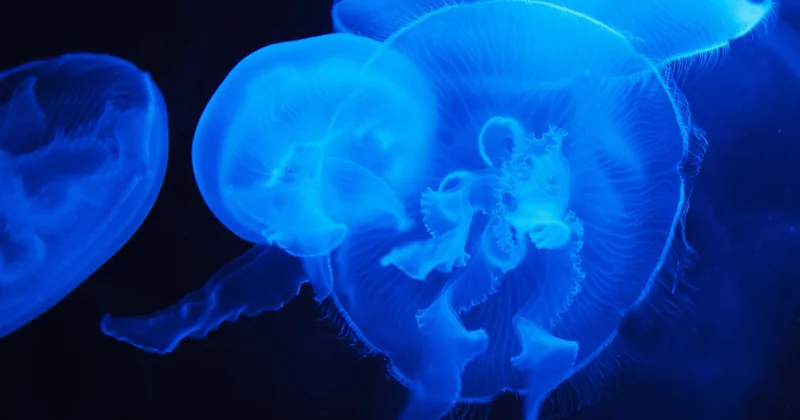
What animals are affected by ocean acidification
The clearest victims are the ones that build calcium carbonate structures. That includes:
- Pteropods — tiny swimming sea snails that sit near the base of the food web in cold waters.
- Corals — reef-building species that deposit calcium carbonate skeletons over decades.
- Sea urchins and oysters — commercially important, and among the first to show damage in hatcheries.
- Mussels, clams, and scallops — the shellfish economy, in other words.
- Coralline algae — the pinkish crust that holds reefs together, and one of the least charismatic, most important organisms in the ocean.
How does ocean acidification affect shellfish
This is where the effects get uncomfortable, because shellfish are the canary and the industry at the same time. Larval oysters and mussels build their first shell within hours of hatching, using carbonate from the surrounding water. If carbonate is scarce, the larvae either build a weaker shell or die before they can. That's not a gradual decline — it's a bottleneck at the most fragile stage of life.
I remember reading about oyster hatcheries on the U.S. West Coast that started losing entire larval batches in the mid-2000s. The hatchery operators initially blamed disease or temperature. It took a while for the chemistry to be identified as the culprit. Once it was, they started buffering their intake water with sodium carbonate — essentially adding the missing mineral back into the tanks. It worked. But it's a greenhouse solution: it protects the hatchery, not the wild population. And it costs money that a small operation doesn't always have.
Ocean acidification effects on coral reefs
Coral reefs are the most visible casualty, and the least reversible. Reefs are built by a slow accumulation of calcium carbonate, and when the water becomes undersaturated with respect to aragonite — one of the two main forms of calcium carbonate — that accumulation slows or reverses. Coral polyps can still live; they just build less skeleton. A reef that stops growing doesn't die immediately, but it stops being a reef in the structural sense. It stops providing the habitat that a thousand other species depend on.
Combine that with bleaching from warm water, and you have a compound problem. Bleaching weakens the coral; acidification then prevents it from rebuilding. Either stressor alone is survivable in many cases. Together, they are not.
| Organism group | Primary effect | Economic or ecological role |
|---|---|---|
| Pteropods | Shell dissolution in cold, high-CO₂ waters | Base of food web for salmon, herring, whales |
| Oysters and mussels | Larval mortality, weaker shells | Shellfish industry, coastal jobs |
| Corals | Slower skeleton growth, reef erosion | Habitat, tourism, coastal storm protection |
| Sea urchins | Reduced larval survival | Fishery, kelp forest grazing |
| Coccolithophores | Mixed — some benefit, some malformed shells | Carbon cycling, plankton food web |
Where the damage shows up first
Acidification doesn't hit every stretch of ocean at the same time. The chemistry varies with temperature, depth, and how the water got there in the first place. Cold water holds more CO₂, which is why polar and subpolar regions are on the front line. Upwelling zones — places where deep, CO₂-rich water is pulled to the surface — are another hotspot.
The Pacific Northwest coast of North America is one of the clearest examples. Seasonal upwelling brings water that's already naturally rich in CO₂ to the surface, and anthropogenic CO₂ has pushed it over the threshold where shellfish larvae can no longer build shells reliably. That's why the hatchery buffering trick became necessary there before anywhere else.
What makes this geographically unfair is that the regions most exposed to acidification are often the ones least responsible for the emissions causing it. Small island nations and coastal communities in the tropics depend on reefs and shellfish for food and income, and they contribute a tiny fraction of global CO₂. They get the consequences first.
Why ocean acidification matters for humans
You can care about pteropods for their own sake, but the human consequences are more concrete than most people realize, and they're already measurable in some places.
How does ocean acidification affect humans
The pathways are food, income, and coastal protection. On food: the ocean provides a significant share of protein for billions of people, and the species most vulnerable to acidification are often the ones small-scale fishers depend on. On income: shellfish farming, reef tourism, and commercial fishing employ millions of people globally. On protection: healthy reefs absorb wave energy that would otherwise hit coastlines directly. When reefs erode, storm surges reach further inland.
There's also a nutritional angle that gets less attention. Shellfish are a dense source of iron, zinc, and omega-3s, and they're often the cheapest accessible animal protein in coastal communities. When shellfish harvests drop, you don't just lose a job — you lose a nutrient source that's hard to replace with rice or maize.
Why ocean acidification matters and impacts humans
I'll put it bluntly: the ocean has absorbed roughly a quarter of our CO₂ emissions and softened the climate consequences in the process. If that absorption capacity degrades — and there's evidence that it varies regionally — then the atmospheric CO₂ problem gets harder, not easier. The ocean isn't just a victim here. It's been a buffer, and buffers wear out.
The other reason it matters is timing. Acidification operates on a lag. The chemistry we've already triggered will play out over decades regardless of what we do now, because the ocean takes time to equilibrate with the atmosphere. That means the next twenty years are already partly written. The question is what happens after that.
Solutions to ocean acidification
I want to be honest here, because this is the section where most articles get vague and optimistic. There is no local fix for a global chemistry problem. But that doesn't mean nothing can be done, and some of the interventions are more promising than the headlines suggest.
What actually works
Reducing CO₂ emissions is the only lever that addresses the root cause. Everything else is either mitigation of local symptoms or research into carbon removal. That's not a satisfying answer, but it's the accurate one.
Beyond emissions reduction, several approaches have real evidence behind them:
- Seagrass and kelp restoration. These plants absorb CO₂ locally and can create small pockets of less acidic water. The effect is local, not global, but for a shellfish bed it can matter.
- Shellfish hatchery buffering. Proven, cheap, already in use on the West Coast. It doesn't help wild populations, but it keeps the industry alive.
- Selective breeding. Some oyster strains tolerate lower pH better than others. Breeding for resilience is slow but effective.
- Reducing local nutrient runoff. Doesn't fix acidification, but it removes a compounding stressor — nutrient pollution can drive local pH down further through algal decomposition.
What doesn't work, and why
Large-scale ocean fertilization — dumping iron into the sea to trigger plankton blooms — has been proposed repeatedly and has consistently underdelivered. The carbon captured tends to be re-released when the plankton die and decompose, and the ecological side effects are unpredictable. I'd treat any "we can geoengineer our way out" claim with heavy skepticism.
Direct ocean alkalinity enhancement — adding alkaline minerals to seawater to neutralize the acid — is more promising on paper and is being studied seriously. But the scale required is enormous, the mineral sourcing is a supply chain problem, and the ecological risks of dumping millions of tons of crushed rock into the ocean are not fully understood. It might work. It isn't ready.
The part that keeps me up
Here's the thing about a slow chemistry problem: it's easy to defer. The pteropod shells thinning out today don't make a sound. The oyster larvae dying in a hatchery tank look like a bad batch, not a warning. The reef that stops growing looks fine for years before it starts to crumble.
But the lag works in both directions. The ocean took decades to absorb the CO₂ we've already released, and it will take decades to show the full consequences. The choices made in the next ten years will determine what the ocean looks like in 2080. What disconcerts me isn't the science — the science is clear. It's that the timeline is long enough for every generation to assume the next one will deal with it.
If you take one thing from this, take the mechanism: CO₂ dissolves, carbonate drops, shells get harder to build, the food web gets thinner, and the effects land hardest on the people who did the least to cause them. That's not a prediction. It's already underway.