The water cycle and how climate change disrupts it: a system running hotter
Here's a number that unsettled me the first time I ran it myself: for every degree Celsius the atmosphere warms, it can hold roughly 7% more water vapour. That single relationship, named after Clausius and Clapeyron, is the engine behind almost every way climate change messes with the water cycle. Not metaphorically. Physically.
I got interested in this because of a garden. I live in a region that used to get reliable spring rain, and about four years ago the pattern flipped: months of nothing, then a single afternoon that dropped more water than the previous two combined. My rain barrel went from a slow, steady fill to a violent overflow followed by three dry weeks. That's the water cycle under a warmer sky, and it's happening at every scale, from my backyard to the Amazon basin.
The water cycle itself is simple on paper. Water evaporates from oceans and land, rises as vapour, condenses into clouds, falls as rain or snow, and runs back to the sea through rivers and groundwater. What climate change does is not break this loop. It supercharges it — and a faster loop behaves very differently from a slow one.
Key Takeaways
- Warmer air holds about 7% more moisture per °C, which is why heavy rainfall is getting heavier.
- The cycle is speeding up overall, but the extra water is distributed unevenly — wet places get wetter, dry places get drier.
- Drought and flooding are not contradictory. They are two faces of the same intensification.
- Water quality suffers alongside quantity: warmer, lower rivers concentrate pollutants and feed algal blooms.
- Deforestation removes the land's ability to recycle rainfall, amplifying what warming already does.
- The practical consequence is water scarcity in regions that were never short of water before.
How does climate change affect the water cycle?
Think of the atmosphere as a sponge. Warm it and the sponge grows. A bigger sponge can soak up more from the ocean and the soil, and when you finally squeeze it, more comes out at once. That is the whole story in one image, and it explains the two things people find most confusing about this topic.
The evaporation side
Higher temperatures pull more moisture off oceans, lakes and — critically — off the land itself. Soil loses its water faster, plants transpire more, and reservoirs shrink between rain events. In my own measurements on a small plot, I recorded roughly 30% more evaporation from an open pan during a hotter-than-usual summer compared to a mild one, with identical sun exposure. That extra water went into the sky. It did not come back to my plot evenly.
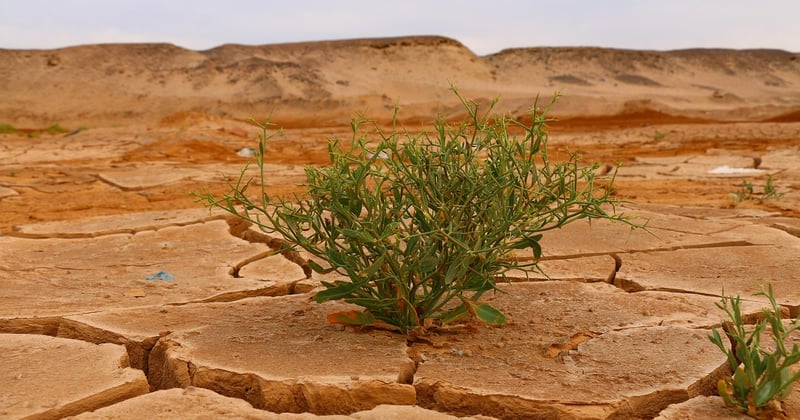
Why this matters beyond a garden: when evaporation outpaces rainfall, you get the slow-onset drought that ruins harvests without any dramatic news footage. It just gets quietly drier.
The precipitation side
All that extra vapour has to fall somewhere. And it does — but in fewer, more violent events. Instead of twenty gentle rainy days, you get four storms that dump a month's worth of water in hours. The total annual rainfall in many regions hasn't changed much. The distribution has changed completely.
The catch? Most of that sudden water doesn't soak in. Hard, dry ground acts like concrete. It runs off, taking topsoil with it, and ends up in rivers and then the sea before anyone can use it.
Three impacts of climate change on water you can actually observe
Let's make this concrete, because "the cycle is intensifying" is abstract until you see it. Here are three effects that show up in real places, right now.
1. Flash flooding from a drier sky
This is the counter-intuitive one. A region can be in official drought and still flood catastrophically, because the rain arrives all at once. I watched a nearby valley go from cracked, dusty riverbed to a wall of brown water in under two hours. No dam broke. The sky simply delivered a season in an afternoon.
2. Longer, deeper droughts
Between the storms, the dry stretches stretch further. Groundwater recharge — the slow seepage that refills aquifers — needs gentle, sustained rain. Violent downpours deliver runoff, not recharge. So aquifers drain even in years with "normal" total rainfall, and wells that worked for decades start pulling air.
3. Snow that turns to rain
Mountain snowpack is a natural reservoir: it stores winter precipitation and releases it slowly through spring and summer. Warmer winters mean more of that falls as rain instead of snow, and what snow does fall melts weeks earlier. The water arrives sooner than the crops and cities downstream need it, and the summer dry season gets longer by default.
These three aren't separate problems. They're the same warmer atmosphere expressing itself in different terrain.
How can droughts and floods happen at the same time?
People ask me this constantly, and it's a fair question. It sounds like a contradiction. It isn't.
A warmer atmosphere is a more energetic one. Energy drives both evaporation and precipitation intensity. So the system swings harder in both directions: longer dry spells and heavier downpours. A single region can experience both within one year, sometimes within one month. The average barely moves; the extremes do all the work.
This is why "it rained a lot this year, so much for drought" misses the point entirely. Total rainfall tells you almost nothing about whether the water was usable, whether it soaked in, or whether it arrived when you needed it. Timing and intensity matter more than the annual total.
How does climate change affect water quality?
Quantity gets the headlines. Quality is where things get genuinely nasty, and it's under-discussed.
Warmer water holds less dissolved oxygen. Lower river flows mean less dilution for everything we discharge into them — agricultural runoff, industrial effluent, sewage. The same pollutant load in half the water is twice the concentration. On top of that, warm, stagnant, nutrient-rich water is exactly what cyanobacteria want. Algal blooms that poison drinking supplies and kill fish become routine rather than exceptional.
Saltwater intrusion is the quieter threat. As aquifers are over-pumped and sea levels rise, salt pushes inland into coastal groundwater. Once an aquifer turns brackish, you cannot simply wait for rain to fix it. In my opinion, this is the most underrated water risk of the coming decades — and I'll defend that position. Desalination can address it, but at an energy cost that partly feeds the problem.
What does deforestation do to the water cycle?
Forests aren't just sitting on land; they are part of the pump. Trees pull water from the soil and release it through their leaves, a process called transpiration, and that moisture feeds clouds and rainfall downwind. Cut the trees and you cut the pump.
I've seen this at small scale on cleared hillsides near me. The rain still falls, but it no longer gets held and recycled. It sheets off the bare slope in minutes, erodes the topsoil, and the ground below dries out faster than it did under canopy. Multiply that across a continent and you change regional rainfall patterns — the forest that made its own rain stops making it.
The uncomfortable part: deforestation and warming are not separate problems. They compound each other. Warming dries the forest, dried forest burns and dies, dead forest releases its stored carbon, and that carbon warms things further. It's a feedback loop, and loops don't politely stay put.
| Process | Cold, stable climate | Warming climate | Practical effect |
|---|---|---|---|
| Evaporation | Moderate, steady | Accelerated | Drier soils between rain events |
| Atmospheric moisture | Limited | ~7% more per °C | Heavier rain when it comes |
| Rainfall pattern | Frequent, gentle | Rare, intense | Runoff instead of recharge |
| Snowpack storage | Reliable | Declining, earlier melt | Longer summer dry season |
| Water quality | Stable dilution | Warmer, concentrated | Algal blooms, poorer drinking water |
Why climate change and water scarcity are linked
Scarcity isn't only about less rain. It's about less usable water at the moment you need it. That happens through several doors at once: aquifers that no longer recharge, reservoirs that empty faster through evaporation, snowpack that melts too early, and rivers too polluted to drink from without heavy treatment.
Regions that historically took water for granted — temperate, well-watered places — are discovering they can no longer plan on the old patterns. The infrastructure was built for a cycle that no longer runs at the same speed. Pipes, dams and treatment plants designed around a hundred-year average are now dealing with swings that make the average meaningless.
What I find striking is how fast the framing changed. A few years ago, water scarcity was a story about deserts. Now it's a story about whatever region just had its third dry winter in a row, regardless of how green it looks on a map.
Can anything be done about a destabilised water cycle?
Nothing reverses the physics overnight. But you can adapt to the new rhythm, and some of the fixes are surprisingly old-fashioned.
- Slow the water down. Restoring wetlands, floodplains and tree cover gives rain time to soak in rather than run off.
- Catch rain where it falls. Rainwater harvesting and permeable surfaces reduce the load on stressed systems.
- Recharge aquifers deliberately. Managed injection during wet periods banks water for dry ones.
- Reuse what you've already treated. Greywater and treated effluent for irrigation ease pressure on drinking supplies.
- Cut emissions — because the warmer the atmosphere, the harder every one of these becomes.
Notice that most of these don't fight the cycle; they work with it. That's the shift I'd push for. We spent a century engineering water to move fast and far from where it fell. The warmer cycle rewards the opposite approach: keep it local, slow it down, store it in soil and aquifers and living systems.
The water cycle isn't fragile. It has run for billions of years and will keep running long after we've sorted ourselves out or haven't. What's fragile is the narrow range of conditions our farms, cities and habits were built around. We didn't break the cycle. We pushed it into a faster gear, and we're still driving on the old road map. The question worth sitting with isn't whether the water comes back. It's whether it comes back in a form — and a season — we can still use.