
What feedback loops actually do to the climate — and why the numbers never work in your favour
Ask a room of smart people what happens when the Arctic loses its summer ice and you'll get one of two answers. Either "the planet gets warmer" or a vague shrug. Both are incomplete, and the gap between them is where the real story lives.
The ice doesn't just disappear. It stops doing a job it was doing for free.
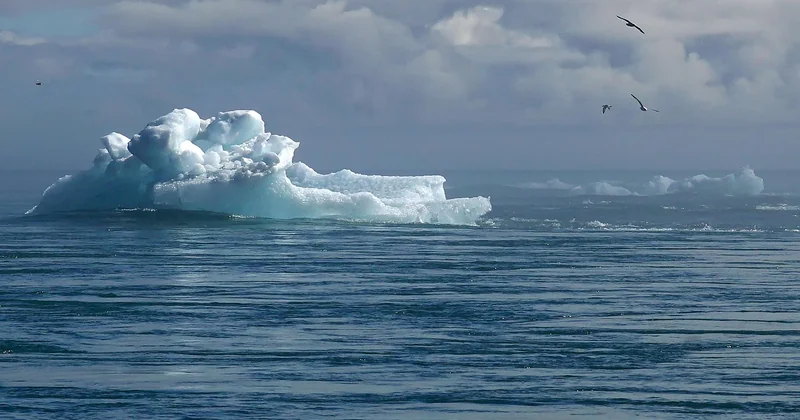
White ice reflects roughly 80–90% of incoming sunlight straight back into space. Open ocean water reflects less than 10%. So when a patch of sea ice melts, the surface underneath goes from mirror to sponge. More heat absorbed, more melting, more dark water. That loop is what climate scientists call a positive feedback — the word "positive" here has nothing to do with good news. It means the process amplifies itself. Understanding climate feedback loops and tipping points comes down to grasping this one uncomfortable idea: the system doesn't respond in straight lines.
I'll be honest, the first time I sat down with a proper climate physics primer I expected the math to feel abstract. It didn't. It felt like watching dominoes.
Key Takeaways
- Feedback loops are processes where the output of a change feeds back into the change itself, either amplifying it (positive) or dampening it (negative).
- Positive feedbacks in the climate system currently outweigh negative ones, which is why warming accelerates rather than self-correcting.
- Tipping points are thresholds past which a system reorganises into a new state, often too fast for ecosystems or economies to adapt to.
- Water vapour, ice-albedo, permafrost carbon and cloud behaviour are the four feedbacks that matter most for near-term outcomes.
- The biggest source of uncertainty isn't whether feedbacks exist — it's how strongly they scale as temperatures rise.
- Regional tipping points (coral reefs, boreal forests) can arrive decades before global ones, and they hit specific people first.
Feedback loops, explained without the jargon
A feedback loop is any process where the result of a change loops back and influences the change that caused it. That's it. No elaborate theory required.

Think of a microphone too close to its own speaker. The sound feeds into the mic, gets amplified, comes out of the speaker, feeds back into the mic louder. That's a positive feedback: runaway amplification. Now think of a thermostat. Room gets cold, heater kicks in, room warms up, heater shuts off. That's negative feedback: self-correction.
Climate systems contain both. The problem is the ratio.
Positive vs negative — these aren't moral labels
This trips up almost everyone at first. In physics, "positive feedback" simply means the response pushes the original change further in the same direction. "Negative feedback" means it pushes back. A negative feedback isn't inherently good either — it can just mean a system is resisting a shift you might actually want.
Here's the uncomfortable part. As global temperatures climb, most of the large-scale feedbacks in the climate system are positive. The stabilising ones — like the extra infrared radiation a warmer planet emits back to space, which is genuine negative feedback — exist, but they're not strong enough to cancel the amplifiers.
Why the arithmetic is stacked against us
Roughly speaking, a doubling of atmospheric CO₂ alone would warm the planet by a little over 1°C. But the observed and modelled warming from that doubling lands closer to 2.5–4°C. That extra 1.5 to 3 degrees is the work of feedbacks. Water vapour is the biggest contributor: warmer air holds more moisture, water vapour is itself a greenhouse gas, and so warming begets more warming. Clouds are the wildcard — some reflect sunlight (cooling), some trap heat (warming), and the net effect changes depending on altitude and droplet size.
When I first started reading climate papers properly, I assumed cloud feedback was a small correction term. It is not. It's one of the largest single uncertainties in how hot this century actually gets.
The feedback loops you need to know by name
You don't need fifty of them. Four do most of the work.
1. Ice-albedo feedback
Covered above, but it deserves emphasis because it's the clearest example of a positive feedback loop in climate change. As snow and ice retreat, the surface darkens, absorbs more solar energy, and accelerates further melt. This loop is strongest in the Arctic, where warming has outpaced the global average for decades.
2. Water vapour feedback
Warmer atmosphere holds more water vapour. Water vapour is a potent greenhouse gas. More of it, more warming. This is one of the most reliably quantified positive feedbacks — the physics is well understood, and it roughly doubles the warming from CO₂ alone.
3. Permafrost carbon feedback
Frozen northern soils hold an enormous amount of ancient organic carbon. Thaw them, and microbes start decomposing that material, releasing CO₂ and methane. Methane is a much stronger heat-trapping gas over short timescales. This is the one that keeps climate scientists up at night, because the size of the stored carbon is huge and the release is hard to reverse once it starts.
4. Cloud feedback
Still the messiest. Higher clouds tend to trap heat. Lower clouds tend to reflect sunlight. As the atmosphere warms, the balance between these shifts, and the direction of the net effect depends on details that models still disagree on. In my reading, this is where most of the spread in future warming projections comes from.
What are tipping points in climate change?
A tipping point is a threshold beyond which a system stops responding gradually and flips into a different state — usually fast, and usually hard to flip back. The key detail: the change isn't proportional to the push. You can nudge a system for decades with nothing dramatic happening, and then one more push tips the whole thing.

Picture a canoe. You lean left, it tilts slightly. Lean a bit more, it tilts more. Lean past a certain angle and it doesn't tilt further — it capsizes. The last few degrees of lean do the same thing the first few did, but the outcome is categorically different.
That's the structure of a tipping point. It's not a gradual worsening. It's a switch.
Regional vs global — they don't happen at the same time
This is the part that rarely gets explained clearly, and it matters enormously for how you think about risk. Global tipping points — like the complete collapse of a major ice sheet — require sustained warming over centuries. Regional ones can arrive far sooner.
- Coral reefs: mass bleaching events are already happening at current warming levels, and recovery windows are shrinking.
- Boreal forests: stress from drought and fire can push them from carbon sink to carbon source within a few decades.
- Atlantic circulation: weakened overturning would reshape European weather and rainfall patterns well before any global threshold is approached.
Regional tipping means the consequences show up in specific places — specific farms, specific coastlines, specific economies — long before the whole planet hits a headline threshold.
Why tipping points are so hard to predict
Because the system gives almost no warning. Feedbacks can offset each other right up to the edge, and once they stop offsetting, the shift is quick. Paleoclimate records show abrupt transitions again and again — ice cores and sediment layers don't show smooth curves, they show jumps.
And here's the honest bit: no one can tell you the exact temperature at which a given tipping point triggers. The best available framing is "between X and Y, with the risk rising throughout that range." Anyone quoting a single precise number is overselling certainty.
A comparison that makes this concrete
| Feedback | Type | Speed | Reversibility |
|---|---|---|---|
| Ice-albedo | Positive | Years to decades | Slow — refreezing takes far longer than melting |
| Water vapour | Positive | Days to weeks | Fast — tracks temperature almost immediately |
| Permafrost carbon | Positive | Decades to centuries | Very slow — carbon release is effectively one-way |
| Cloud response | Mixed | Hours to years | Fast, but direction is uncertain |
| Infrared radiation to space | Negative | Immediate | Fast — this is the planet's built-in thermostat |
Notice the pattern. The feedbacks that act fastest are either negative (the planet shedding heat) or neutral (clouds, unclear). The feedbacks that act slowly — permafrost, ice sheets — are the ones that lock in warming for generations once they start.
Common misconceptions worth clearing up
Does a negative feedback mean the problem solves itself?
No. The planet does emit more infrared radiation as it warms — a real, active negative feedback. But the strength of that response is fixed by physics, while the positive feedbacks scale up with temperature. The negative feedback slows the rate; it doesn't reverse the direction.
Are tipping points already crossed?
Some regional systems are under severe stress or partially transformed. For the biggest global ones — major ice sheets, widespread permafrost collapse — the scientific consensus is that we're approaching thresholds, not necessarily past them. Every fraction of a degree of warming reduces the margin.
Is the Amazon doomed?
Not necessarily, but it's a system under real pressure. Deforestation combined with warming and drought can push parts of it from rainforest to savanna. That shift would release stored carbon and disrupt rainfall across a continent. The outcome depends heavily on how much deforestation continues and how much warming accumulates — both of which are policy decisions, not physics.
Why this matters for how you think about the next decade
The reason feedback loops are worth understanding isn't to produce a scarier number. It's to correct a mental model.
Most people, when they imagine climate change, picture a dial — turn up the CO₂, get a proportional amount of warming. That model is wrong in a specific and important way. The real system behaves more like a boat that can take on water slowly and then go under suddenly. Feedback loops are the pumps that make it worse. Tipping points are the hull giving way.
There's a version of this story that ends in helplessness, and I want to be honest that I find it tempting. But the same mathematics that makes positive feedbacks dangerous also means small changes to forcing produce outsized effects in the other direction. Cutting emissions isn't chipping away at a linear problem. It's reducing the pressure on a set of thresholds that don't respond linearly either.
Which is why the sluggish decades matter so much more than they feel like they should. Every year of delay isn't one year of gradual damage. It's another year of accumulated pressure on systems that will not warn you before they change.
That canoe doesn't lean forever.