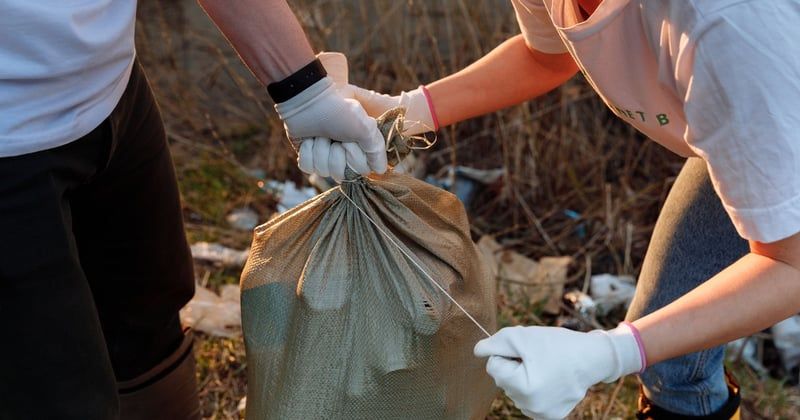
Somewhere in your neighborhood, a community composting program is failing right now. Not because the compost was wrong, but because nobody wanted to be the person who turned the pile on a rainy Tuesday in February. I've seen this happen at a church garden, a housing co-op, and — most memorably — a workplace "green team" that bought three beautiful tumblers and abandoned them within a season.
The compost itself is the easy part. The program is the hard part. So if you want to start a community composting program, the useful question isn't "how do I make compost?" It's "how do I build something a group of people will actually keep doing?" That's the framing I'll use here, and it changes almost every decision that follows.
Key Takeaways
- Composting fails socially before it fails biologically. Plan for who does the work, not just for where the bin goes.
- A pilot with 10–15 households is a better starting point than a block-wide launch.
- Budgets are smaller than people expect for the basics and larger than people expect once you need fencing, signage, and a locked structure.
- Check zoning, insurance, and neighbor proximity before you buy a single bin.
- Start with a carbon source lined up before you accept your first food scrap.
How a community composting program actually works
Three neighbors drop off a bucket of vegetable scraps. Someone with a pitchfork turns the pile once a week. Six weeks later, one of them fills a sack with dark, earthy material and takes it home for the tomato bed. That's the whole idea.
The mechanism underneath it is not complicated. Microbes break down organic matter when they have moisture, oxygen, and a workable ratio of "greens" (nitrogen-rich food scraps, fresh grass) to "browns" (carbon-rich leaves, cardboard, wood chips). A community setup just adds people to the equation — and people are where it gets interesting.
What makes a community program different from a bin in your backyard
A backyard pile tolerates neglect. A shared pile does not, because neglect becomes visible: the bin overflows, someone finds a bag of plastic inside, a neighbor complains about fruit flies. Shared systems need a rhythm and a named person responsible for each part of that rhythm.
Here's the structure that tends to work:
- A site host — a garden, school, church, or business that owns the land and accepts the bin
- One coordinator — not a committee, one person with a phone number
- A drop-off schedule — set hours, not "anytime"
- A turnover roster — who turns, who checks moisture, who reports problems
Notice what's missing from that list: a compost expert. Useful, but not the bottleneck.
How do I start composting for beginners?
Start with a small amount of material and a lot of structure. The most common beginner error isn't the wrong ratio, it's scale: people collect far more food scraps than their pile can absorb, and the whole thing turns into a sludgy, smelly mess that nobody wants to touch.
The four steps to take before any material arrives
- Line up your browns first. Find a reliable source of leaves, wood chips, or shredded cardboard. Without it you'll have a wet pile within a fortnight.
- Pick a bin type. A three-bay wooden or pallet system is forgiving and cheap. Tumbler bins are tidy but small, and they fill up faster than you think.
- Get a pitchfork, a fork for turning, and a moisture check. The squeeze test works fine: a handful should feel like a wrung-out sponge. Dripping means too wet; crumbly and dusty means too dry.
- Recruit your pilot group. Ten to fifteen households, or one floor of an office, is enough to prove the routine.
On bin size, most household-scale programs I've seen run on bins roughly a cubic meter per bay. That holds a surprising amount of finished compost over a season, and it's small enough that one person can turn it in about fifteen minutes.
How does community composting work in practice?
The mechanics are straightforward, and this is the part most guides skip: the schedule.
A typical working setup accepts food scraps on two or three fixed days a week for a two-hour window. Members bring their scraps in a lidded container, tip them into a designated bay, and cover them with a scoop of browns from a bin kept right there. The "cover it" step is the single most effective thing you can do for odor and flies, and it's also the step people forget unless the browns are literally within arm's reach.
The operational details that decide whether it works
Rotation matters more than people expect. A three-bay system cycles material from fresh to partially broken down to finished, with turning on a rough weekly schedule in warm weather and less often in winter. Contamination is your other constant battle — produce stickers, rubber bands, plastic bags, the occasional compostable fork that never actually breaks down. A simple rule helps: if you didn't grow it or cook it, don't put it in.
What about volume? A functioning pile shrinks dramatically as it breaks down, so a bay that looks full in October may settle to half its height by spring. That's normal, not a sign of failure.
How to start a community garden with no money
You can build a small composting setup for very little, but "no money" needs an honest answer, because some costs are hard to avoid.
| Item | Low-cost approach | Where the money actually goes |
|---|---|---|
| Bins | Pallets, salvaged timber, donated drums | Labor and fixings, if you can't get donations |
| Browns | Free from tree surgeons, parks departments, neighbors' leaf bags | Transport, if you need a van |
| Tools | Secondhand pitchforks and a hose | Decent gloves and a sturdy fork |
| Signage | Laminated printouts | A weatherproof board if the site is public |
| Fencing | Pallets or scavenged mesh | This is often the largest single expense |
Fencing is worth flagging. An unfenced pile on semi-public land attracts wildlife and, more importantly, well-meaning strangers who add things you didn't sanction. If your site is visible from a street, budget for a simple enclosure even if the rest is donated.
Where funding usually comes from
Small grants from local environmental or community bodies are the usual route, alongside a modest member contribution — enough to signal commitment, not enough to exclude people. I'd avoid pricing membership by weight at the start; the accounting gets fiddly and the people who most need the service are often the ones who can least be bothered with a scale.
How to start a composting program at work?
Workplaces are the hardest setting and the easiest to get wrong, because the person with the enthusiasm is usually not the person with the authority over the kitchen, the cleaning contract, or the waste pickup.

The first thing to settle is not the bin, it's the building. Who owns the waste contract? Does the landlord allow material on site? Is there a facilities manager who will end up handling overflow on a Friday afternoon? Get those three answered in writing before you announce anything.
The pitfalls I've watched play out
- A bin in the kitchen with no one assigned to empty it by end of day
- Compostable cups and cutlery that look like plastic and cause constant confusion — label the bin, and label what's not allowed
- Announcing the program to the whole company before the pilot group has run for a month
Start with one floor or one kitchen. Run it for a month with a named owner. Then scale.
Site, permissions, insurance, and the neighbor problem
This is the section I'd want someone to hand me before I built anything. Composting is a regulated activity in many places, and a pile on private land with a public drop-off is not automatically the same thing as a backyard bin.
Before you commit to a site, check with your local authority on zoning and any rules about accepting material from outside the property. Ask the site host about their insurance — public liability cover for a drop-off point is a real question, and the answer sometimes surprises people. And talk to the immediate neighbors before the first delivery of scraps, not after the first warm week when the flies arrive.
I'll be blunt: the odor and rodent complaints are almost always a management problem, not a compost problem. A pile that's too wet, or that has food scraps sitting uncovered on the surface, will attract animals. Cover with browns, keep the moisture in range, and turn regularly, and most complaints never materialize.
Who actually does the work
The single question that predicts whether a program survives is this: whose job is it on a wet Tuesday? If the answer is "whoever's around," you have a program that will quietly stop in about four months.
Write the roster down. Name the coordinator, name the backup, name the person who checks the bin on the days the coordinator is away. Rotate the turning duty monthly so no one person burns out. And make the job small enough that people say yes — fifteen minutes a week is a reasonable ask; a Saturday morning every fortnight is not, at least not at the start.
What a realistic first season looks like
Expect to over-collect and under-turn for the first month. Expect at least one contamination incident involving a plastic bag. Expect a slow period in winter when the pile goes quiet and members wonder whether it's broken — it isn't, it's just cold.
By the end of the first season, you should have a modest amount of finished compost, a roster that people actually follow, and a small group of members who've started to feel ownership. That last part is worth more than the compost. A pile can be rebuilt in a weekend. A group that trusts the program takes a season to build, and it's the only thing that keeps the whole thing going when the novelty wears off.
And when someone asks you how the compost is doing, the honest answer is usually that the compost is fine. The interesting question is whether anyone showed up to turn it.