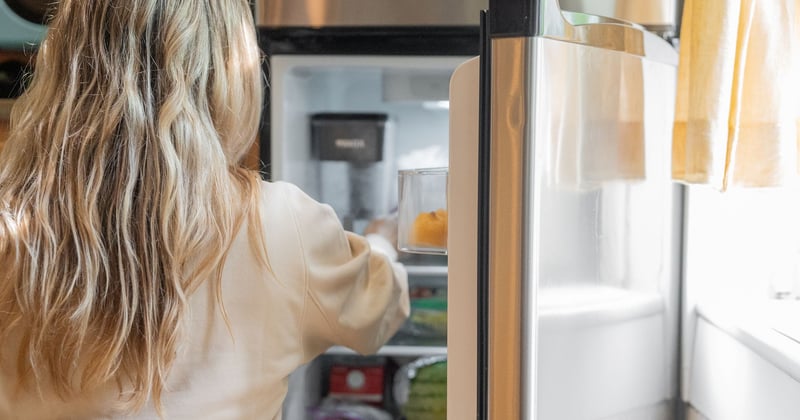
There's a bag of spinach in your fridge right now that you're going to throw away. I don't know you personally, but I know this, because everyone does it. I did it for years — and I only started fixing it when I weighed my kitchen bin for two weeks and watched the number climb past 4.5 kilos. That's a small child's worth of food going into a landfill because I bought a bag of greens with good intentions on a Tuesday.
Reducing food waste at home is mostly not about willpower. It's about systems. The people who waste the least aren't more disciplined than you — they've just designed their kitchen so that the right choice is also the easy one. Here's what actually worked for me, and what quietly failed.
Key takeaways
- Audit before you optimise: weigh your food waste for 1–2 weeks, or you'll fix the wrong problem.
- Storage, not shopping, is where most households lose money — fridge temperature and placement matter more than willpower.
- Date labels like "best before" are about quality, not safety, and cause a huge share of unnecessary binning.
- One flexible "use-it-up" meal per week absorbs leftovers better than any app or spreadsheet.
Why food waste at home is worth fixing (and why guilt doesn't work)
Households are the single biggest source of food waste in most wealthy countries — rougher than grocery stores and restaurants combined. In the UK, WRAP has estimated that household food waste accounts for the majority of the national total, and that most of it was, at the point of binning, still perfectly edible.
Here's the part that gets lost in the moralising: this isn't primarily an ethics problem. It's a cash-flow problem. When I tallied my two-week bin audit in 2023, I'd spent roughly £28 on food I never ate. Annualised, that's over £700 a year. For a household of two. If you're feeding kids, double it.
The real reason good food gets binned
It's almost never "I don't care." It's one of four things: you bought for a plan that changed; you forgot what you had; you didn't know how to store it; or you were scared of the date label. Every tactic below attacks one of those four.
How to reduce food waste at home: start with your own bin, not a checklist
Every "10 ways" list skips the only step that makes the rest stick. You cannot fix waste you haven't measured. Before changing anything, run a short audit.
The two-week bin audit
For ten to fourteen days, put all food waste into one labelled container (a spare bucket works). At the end, dump it on newspaper and sort it into piles: vegetables and fruit, dairy, bread and bakery, leftovers, meat and fish. Weigh each pile or just eyeball the proportions.
When I did this, I expected bread to be the culprit. It was salad leaves and half-used herbs — 40% of my waste by weight. I'd been buying "healthy" and binning "healthy." Fixing that one category cut my total waste by nearly a third within a month, with zero extra effort beyond changing how I stored greens.
What to do with the results
Match the fix to the pile:
- Produce dying fast: storage problem — see the fridge section below.
- Cooked leftovers binned: portioning problem, or lack of a "leftover night."
- Dairy and bread: buying cadence problem — you're shopping at the wrong frequency.
- Date-labelled items: label literacy problem.
The fridge settings nobody checks (and that change everything)
Your fridge is probably set too warm. Most people leave it on whatever the dial was when they moved in. A domestic fridge should sit at 0–5°C, with the coldest zone at the bottom-rear. Warmer than that and everything ages faster — you're not storing food, you're slow-cooking it.

Placement matters more than you think
Fridge door shelves are the warmest spot in the unit, despite being where everyone puts milk. Door = fluctuating temperature every time you open it. Move milk and dairy to the middle shelves, and reserve the door for condiments, which survive the swings.
And two things that should never go in the fridge at all: tomatoes (cold kills their texture and flavour permanently) and potatoes and onions (cold turns starch to sugar; onions go soft and mouldy). I stored onions in the fridge for years and thought they just "went bad quickly." They don't — they were being ruined.
The paper towel trick for greens
Herbs and salad leaves are the fastest losers in most kitchens. Wash, dry thoroughly, wrap in a dry paper towel, and store in a sealed container. Water is the enemy; trapped moisture is what turns leaves to slime. This single change took my herb survival from about three days to nine or ten.
Decoding date labels: best before, use by and the rest
Here's a fact that stops a lot of binning: "best before" is about quality, not safety. It means the food is at peak freshness until that date — past it, it may taste slightly different, but it is not automatically dangerous. "Use by," by contrast, is a safety date and should be respected, particularly for meat, fish and ready-to-eat chilled foods.
| Label | What it actually means | Safe to eat after? |
|---|---|---|
| Best before | Peak quality window | Yes, usually — check, smell, taste |
| Use by | Safety deadline | No — respect it |
| Display until / sell by | Retail stock-rotation aid | Yes — not a consumer safety date |
The catch? Some categories are riskier than others, and I won't pretend otherwise. Use your senses, and when in doubt with meat or soft cheese, bin it. But for a yoghurt two days past its "best before," the sniff test is a reasonable judge.
What are 8 ways to reduce food waste?
A practical, tested set of eight that covers shopping, storage and cooking:
- Shop your fridge and cupboards first — cook a meal from what's already there before writing a list.
- Keep oldest items at the front of each shelf so they get used first.
- Audit once, then fix only your biggest waste category.
- Store greens dry, wrapped, and sealed.
- Freeze in portions the day you bring food home — not the day it's about to expire.
- Read date labels correctly (see above).
- Designate one flexible "use-it-up" meal each week.
- Buy bread and dairy in smaller, more frequent batches.
What are 10 ways to reduce waste?
Food is only part of the kitchen waste picture. These ten extend to packaging and general household waste, which I found naturally overlaps:
- Plan meals for the week before shopping — one list, one trip.
- Buy loose produce where you can, so you buy only what you need.
- Reuse glass jars and containers for storage.
- Compost scraps you can't eat (peels, coffee grounds) instead of binning them.
- Keep a "stock" bag in the freezer for vegetable trimmings to make broth.
- Refuse single-use bags and buy a set of reusable produce bags.
- Cook realistic portions, and freeze the surplus intentionally.
- Repair small appliances before replacing them.
- Rotate pantry stock, oldest to front.
- Check your bin weekly — feedback is what keeps habits alive.
Use-it-up meals and the freezer as a pause button
My most useful habit isn't a list — it's a weekly slot. Every Thursday, whatever's left gets turned into one meal: a frittata, a soup, a stir-fry, a pasta. No recipe, no shopping. It absorbs the odds and ends that would otherwise die quietly on a shelf.

The freezer does the rest. Portion and freeze the day you buy, not the day before expiry — the food is at its best then, and you stop the clock at the right moment. Bread, cooked rice, herb pastes and leftover stews all freeze well. I've stopped counting how many times a frozen portion saved a Tuesday dinner.
The honest failures (so you can skip them)
Not everything worked. Meal-planning apps? I downloaded three and abandoned all three within a fortnight — the planning overhead outweighed the savings for a household my size. I also tried an elaborate spreadsheet to track every item's expiry. Dead in five days.
What did stick: the bin audit, the greens trick, and the Thursday use-it-up meal. Simple, physical, low-friction. That's the pattern — the tactics that survive are the ones that don't ask you to change who you are.
Does freezing food reduce its nutritional value?
Largely no. Freezing pauses bacterial growth and preserves most nutrients well; in many cases frozen produce is nutritionally comparable to fresh, since it's frozen near harvest. Texture can suffer on some items (cucumber, lettuce), so freeze those only for cooking.
Is it cheaper to meal plan or to shop daily?
It depends on your setup. For most people with a standard work week, one planned shop plus a top-up for fresh produce beats daily trips on both cost and waste. Daily shopping only wins if you're disciplined enough to buy exactly what you'll cook that day — which, honestly, is rarer than people think.
Two weeks from now, that spinach will be gone one way or another. The only question is whether it leaves as dinner or as guilt. Weigh your bin once. Fix one thing. Then let the next Thursday decide the rest.