You've probably heard the phrase "climate change's evil twin" thrown around in ocean documentaries. It sounds like a marketing line invented for a Netflix series. But there's a real question buried underneath the drama: when we talk about climate change and ocean acidification, are we describing two separate problems, or two faces of the same one? And does a warmer planet literally make the sea more acidic?
I've been following this research closely for years, and the more I read, the more I notice how often even solid coverage blurs the mechanism. So let me try to untangle it properly.
Key Takeaways
- Ocean acidification is not caused by a warmer climate; both are parallel consequences of rising atmospheric CO₂.
- The ocean has absorbed roughly 25–30% of human CO₂ emissions, which is why its chemistry is changing so fast.
- Surface ocean pH has dropped by about 0.1 units since the pre-industrial era — a shift of roughly 30% in hydrogen ion concentration.
- Warming, acidification and oxygen loss hit marine life simultaneously, and the combined stress is often worse than the sum of its parts.
- Coral reefs and shellfish hatcheries are the first places where the economic cost becomes visible, not just the ecological one.
How climate change affects ocean acidification: the mechanism most articles get wrong
Here's the thing that tripped me up at first: ocean acidification is not a downstream effect of global warming. It's not that a hotter atmosphere somehow "sours" the sea. That framing is intuitive and wrong.
The real link is a shared cause. Burning fossil fuels releases carbon dioxide. Part of that CO₂ stays in the atmosphere and traps heat — that's climate change. A large chunk dissolves into the ocean, where it reacts with water to form carbonic acid, which releases hydrogen ions and lowers pH. That's acidification. Two outcomes, one origin.
What does climate change and ocean acidification have in common?
They share a single driver: anthropogenic CO₂ emissions. Both are measurable, both are accelerating, and both carry consequences that outlast the emissions that created them. The ocean takes up around a quarter to a third of the CO₂ humans release each year — a service that has slowed atmospheric warming but steadily altered seawater chemistry in the process. Think of it as a loan the ocean is making us, with interest compounding in the form of lower pH.
Why the two effects interact even though neither causes the other
Warm water holds less dissolved gas, so a heated surface layer absorbs CO₂ less efficiently. That's a genuine feedback: as the ocean warms, its capacity to buffer our emissions weakens, meaning more CO₂ stays airborne and more warming follows. Meanwhile, warmer water also holds less oxygen, and lower oxygen combined with lower pH creates conditions that many species cannot tolerate.
I still remember reading a shellfish study a few years back where mussels exposed to both low pH and elevated temperature showed shell damage far beyond what either stressor produced alone. That finding stuck with me — it reframed acidification from a chemistry story into an ecology story.
The chemistry, in plain terms
When CO₂ dissolves, it doesn't just float around. It reacts:
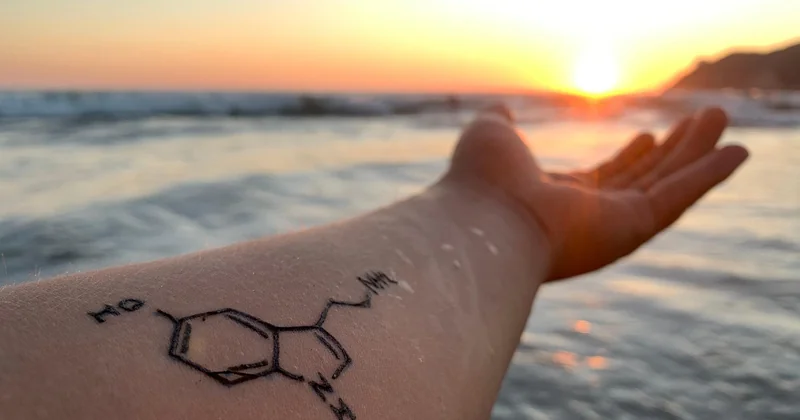
- CO₂ + H₂O → H₂CO₃ (carbonic acid)
- H₂CO₃ → H⁺ + HCO₃⁻ (hydrogen ion + bicarbonate)
- The extra H⁺ ions lower pH — more acidity
- Those same ions bind with carbonate (CO₃²⁻), reducing the raw material corals, oysters and pteropods need to build shells and skeletons
The pH scale is logarithmic, so a 0.1-unit drop sounds trivial. It isn't. It represents roughly a 30% increase in hydrogen ion concentration since the industrial era began.
What is the biggest cause of ocean acidification?
Absorbed atmospheric CO₂ from burning coal, oil and gas. Full stop. Coastal runoff, agricultural nutrients and upwelling can shift pH locally, but nothing comes close to the global signal from fossil carbon. That distinction matters because it shapes the solution: you can't fix acidification by cleaning up a bay.
What lower pH actually does to marine life
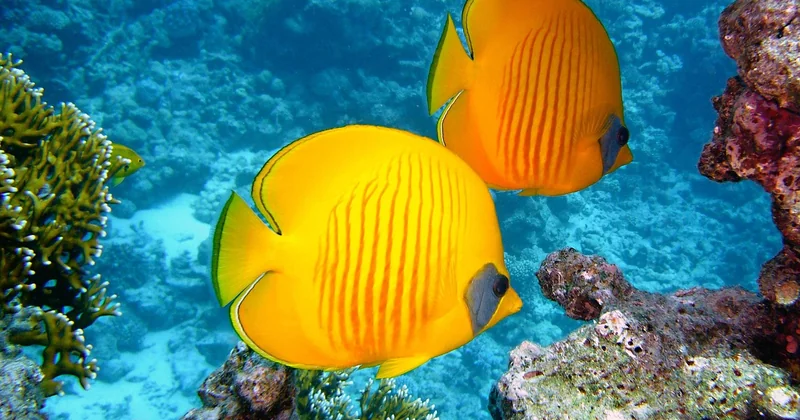
Calcifying organisms take the first hit. Corals, molluscs, sea urchins and tiny plankton called pteropods all depend on carbonate ions being abundant enough for shell-building. As saturation state falls, shells form more slowly and dissolve faster — especially in colder, higher-latitude waters where carbonate is naturally scarcer.
But the effects go well beyond shells:
- Some fish lose their ability to detect predators under elevated CO₂, likely through disrupted neurotransmitter function
- Reproductive success in certain shellfish drops sharply at pH levels projected for later this century
- Reef-building corals lose the structural integrity that shelters thousands of species
- Entire food webs shift when the small calcifiers at the base decline
Does this affect humans?
Directly, yes. Oyster hatcheries on the U.S. West Coast have already suffered larval die-offs linked to acidic upwelled water, forcing operators to buffer their intake or relocate. Commercial fisheries tied to reefs and shellfish represent billions in annual revenue and millions of livelihoods. When the base of the food chain shifts, the effects ripple to dinner plates.
Where this is heading — and the feedbacks nobody likes to talk about
By 2100, surface pH is projected to fall by another 0.2 to 0.3 units under mid-to-high emission pathways. That's a rate of change probably unmatched in the last 50 million years — not because the total shift is unprecedented in magnitude, but because of how fast it's happening.
The feedback loops are what keep researchers up at night. One is biological: if acidification harms the plankton that pump carbon to the deep sea, the ocean's ability to remove CO₂ weakens, which leaves more in the atmosphere, which drives more warming. That's a loop where acidification feeds back into climate change — the reverse direction of the question most people ask.
Will Earth be livable in 2050?
Yes — for humans, broadly. No serious projection suggests otherwise. The honest concern is what kind of livability: more heat extremes, more coastal flooding, more climate-driven migration, and increasingly fragile marine food systems. Coral reefs may largely disappear as functioning ecosystems within that timeframe under high-emission scenarios, and the fisheries that depend on them will follow.
What do 97% of scientists believe is causing climate change?
The consensus position is that human activities — chiefly greenhouse gas emissions from fossil fuels — are the dominant cause of recent warming. That figure comes from multiple independent surveys of peer-reviewed literature and has been replicated repeatedly. It's not a poll of opinion; it's a measure of what the published science says.
A quick comparison of the stressors at play
| Stressor | Primary driver | Most visible effect |
|---|---|---|
| Ocean acidification | CO₂ absorption | Shell and coral dissolution, calcifier decline |
| Ocean warming | Greenhouse gas trapping | Coral bleaching, species range shifts |
| Deoxygenation | Warming + nutrient runoff | Dead zones, suffocation events |
| Sea-level rise | Thermal expansion + ice melt | Coastal flooding, habitat loss |
Notice that all four trace back to the same root. That's the crux of this whole topic.
What can actually be done
Local interventions — seagrass restoration, shellfish buffering, reducing nutrient runoff — help specific places and are worth supporting. But the global pH trajectory only bends one way: by cutting emissions. There's no engineering shortcut currently available at scale, and ideas like ocean alkalization remain experimental, expensive and full of unknowns.
Which brings me to the part I find genuinely clarifying. The ocean has done us a massive favor by absorbing our carbon. It has dampened the warming we'd otherwise face. The price is a chemistry shift that will persist for centuries even after we stop emitting. That's not a reason for despair; it's a reason to treat the ocean not as a passive backdrop but as a ledger that records every ton we release. The question isn't whether the sea will remember. It's how long we want the entry to keep growing.